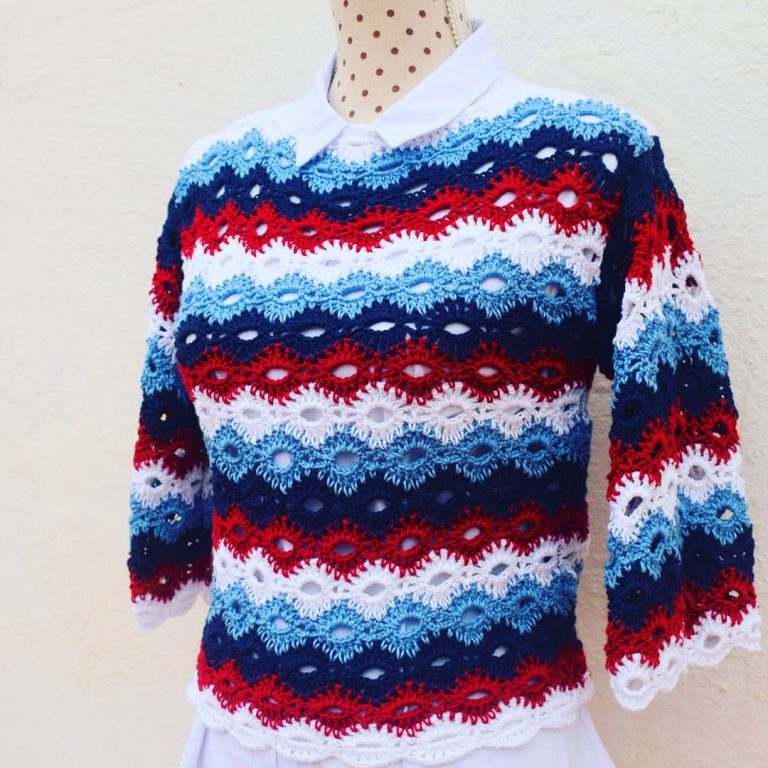
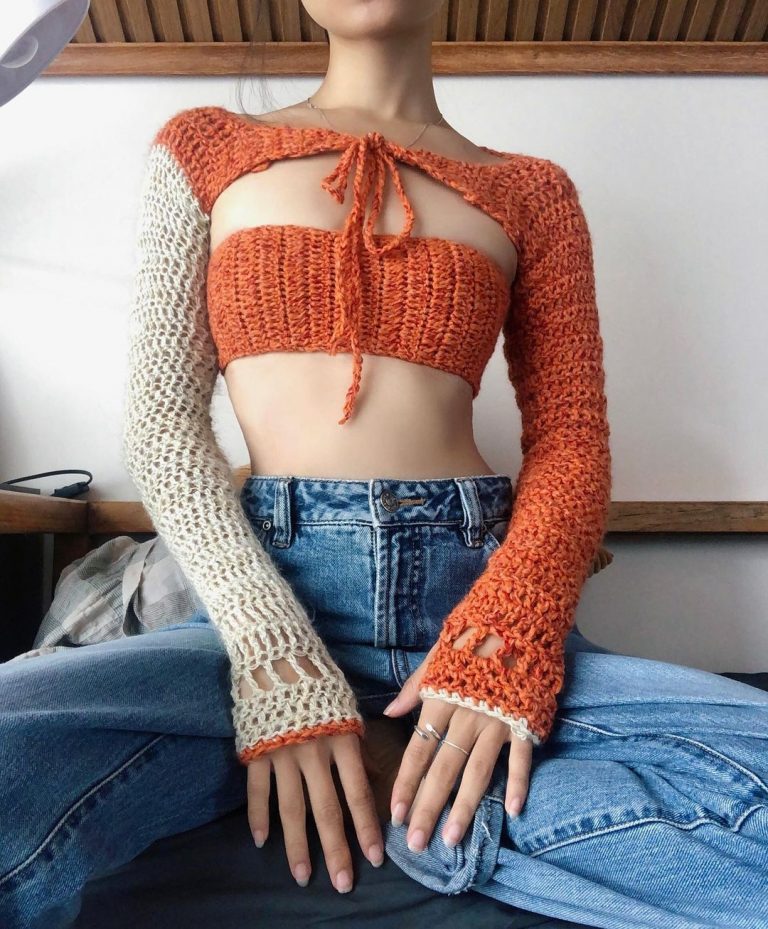
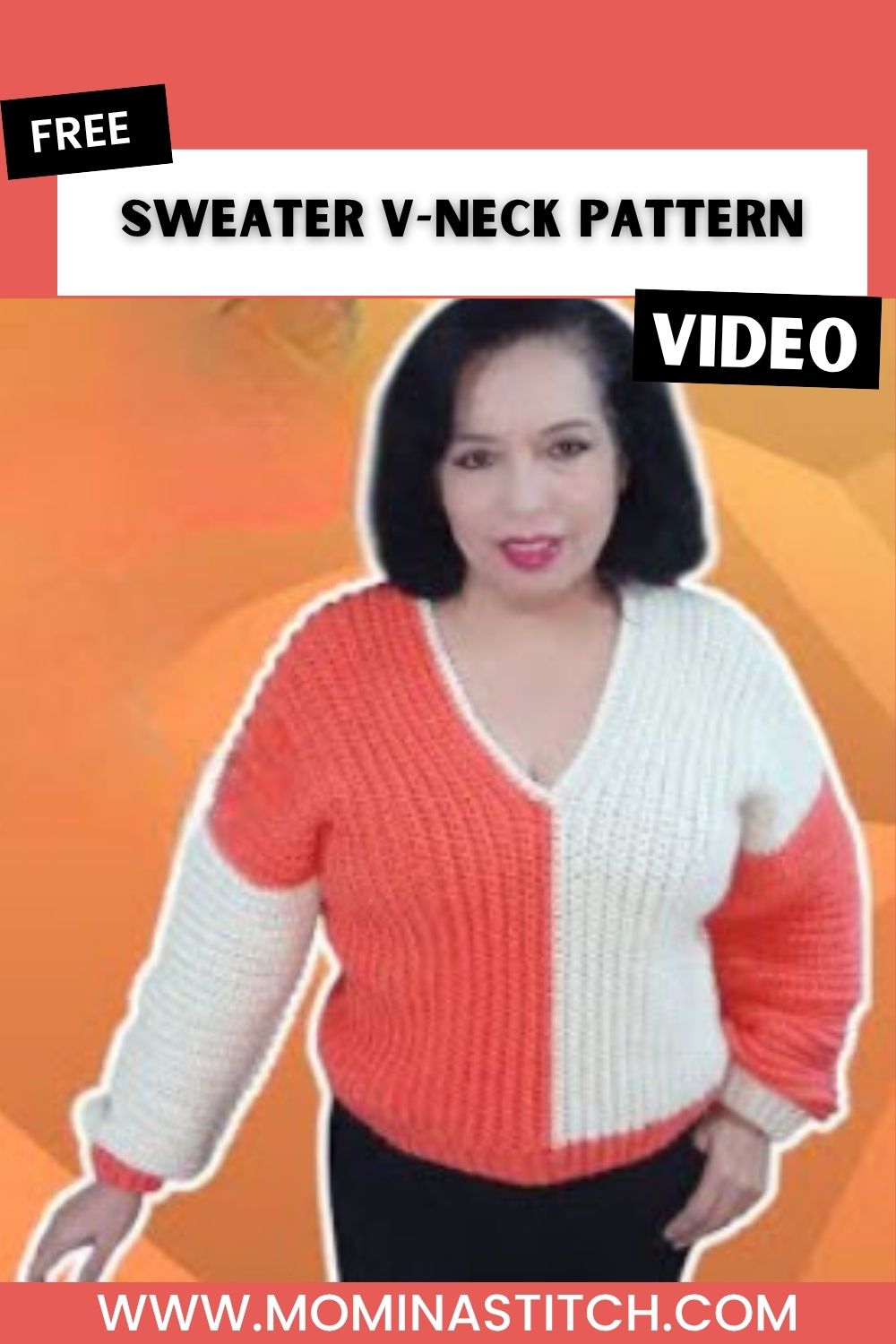
Two-Tone Crochet V-Neck Sweater Pattern for a Fresh Look
A plain sweater is nice, but a color-blocked neckline turns it into something special. Two-Tone Crochet Sweater V-Neck Pattern This design uses a simple contrast-color technique around the yoke, giving your project a fresh, boutique-style finish that’s still easy enough for a crochet beginner to try.
This two-tone crochet sweater pattern combines a sturdy ribbed body with a soft contrast-color V-neck yoke, creating a piece that looks far more advanced than the stitch count actually is. This specific pattern is used to add a clean, structured color-block detail around the neckline, which is a technique many crocheters reach for when they want to dress up a basic sweater without adding extra embellishments. The result is a cozy, wearable piece with a polished, ready-to-sell look, and it adds a stylish touch to your wardrobe that makes your closet feel a little more put together every time you reach for it.
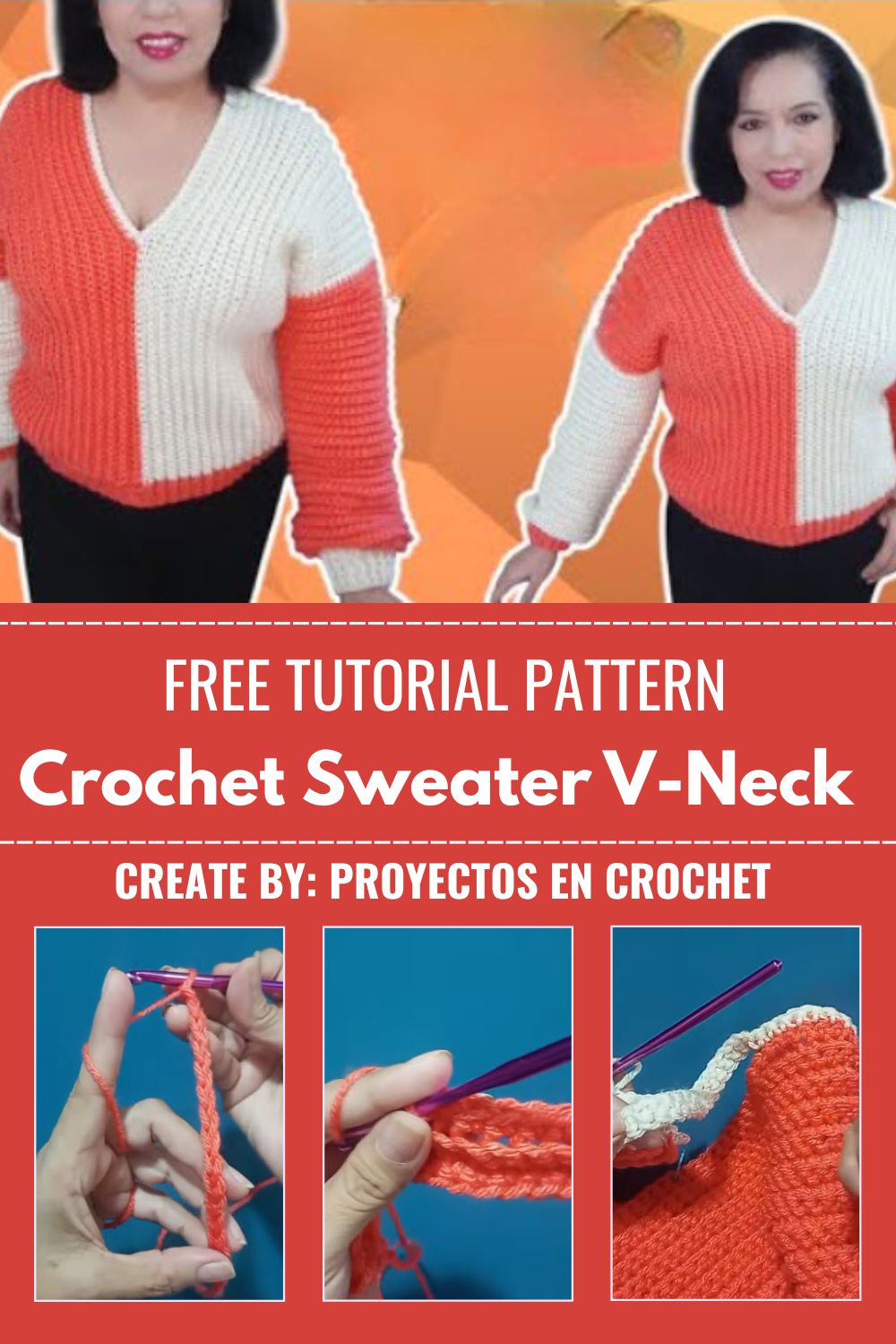
Pattern Overview
- Two-color crochet sweater with a ribbed body and contrast V-neck yoke
- Worked flat or in the round, then joined at the shoulder seams
- Main color forms the body; contrast color highlights the neckline
- Beginner-friendly stitches throughout, with one simple color-change step
Special Techniques
- Color change (carrying or joining yarn): switching from your main color to your contrast color cleanly at the neckline without visible gaps
- Ribbed stitch pattern: creates the textured, stretchy body of the sweater
- Working in rounds around the yoke: keeps the V-neck shaping even on both sides
- Weaving in color-change tails neatly so the inside stays tidy
Time Box
- Prep time (yarn prep, gauge swatch): 15 minutes
- Stitching time (main body and ribbing): 3 to 4 hours
- Colorwork time (contrast yoke section): 1 to 1.5 hours
- Finishing time (seaming, weaving ends): 25 to 30 minutes
Common Mistakes to Avoid
- Switching yarn colors mid-row instead of at the row or round edge, which creates uneven color blocks
- Pulling the new color too tight when joining, which puckers the neckline
- Skipping a gauge swatch, leading to a sweater that runs too tight or too loose
- Forgetting to weave in color-change ends securely, causing them to work loose over time
Uses and Benefits
A two-tone crochet sweater is a versatile piece that works for everyday wear, layering, or even as a handmade gift. The contrast neckline adds visual interest without requiring embroidery or extra embellishments, making it a fast way to upgrade a simple design. This pattern is also useful for crocheters who want to practice clean color changes before moving on to more complex colorwork projects, since the technique here is repeated just once around the yoke.
Helpful Beginner Tips
- Practice your color change on a small swatch before starting the actual yoke
- Keep your tension consistent when switching colors to avoid a loose or bunched row
- Use a stitch marker to track where your color change begins and ends
- Choose two colors with good contrast so the two-tone effect really stands out
Assembly
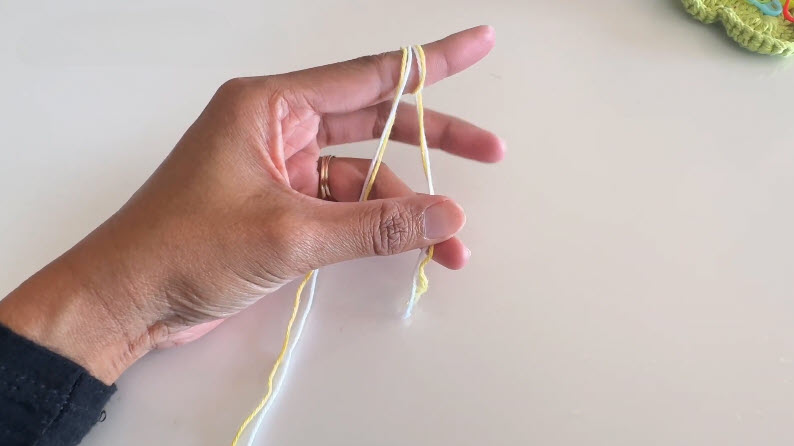
Step 1: Prepare Your Two Yarn Colors
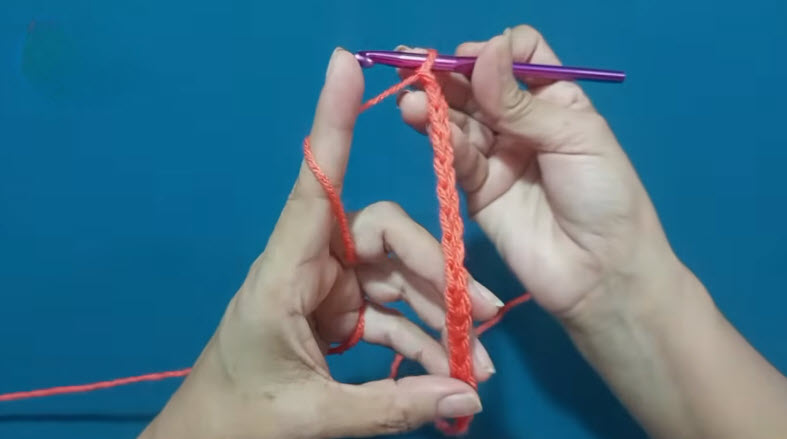
Hold both your main color and contrast color yarns with even tension around your fingers before you begin. Getting comfortable with both strands at this stage makes the later color-change step much smoother when it’s time to switch.
Step 2: Start the Ribbed Body Base
Using your main color, chain your foundation and begin working your ribbed stitch pattern. Keep your hook angle consistent and your stitches even, since this row sets the width for the entire body of the sweater.
Step 3: Continue the Ribbing Pattern
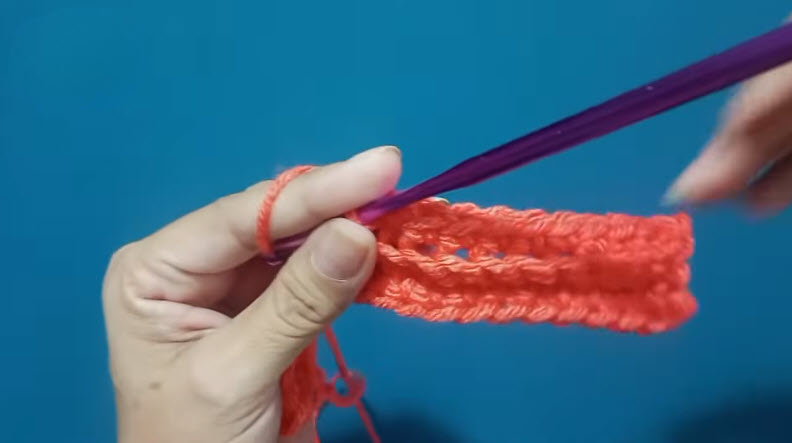
Keep working row after row in your main color until your ribbed section reaches your desired body length. This close, textured stitch pattern gives the sweater its stretch and structure.
Step 4: Switch to Your Contrast Color at the Yoke
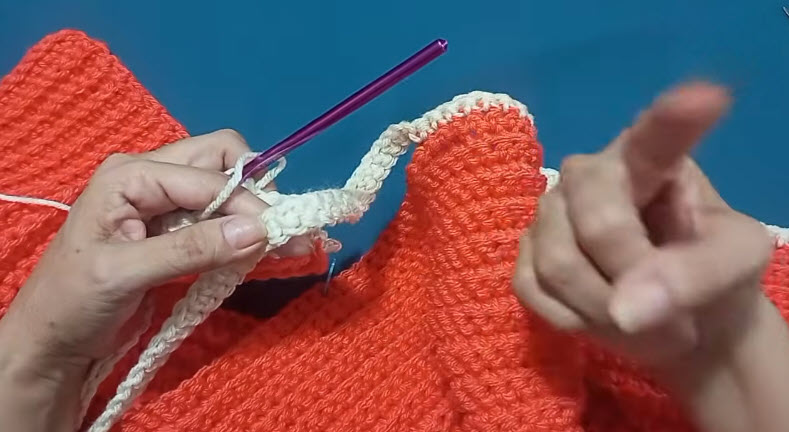
At the point where the yoke begins, join your contrast color cleanly at the edge of a round or row. Work your stitches evenly around the neckline opening, keeping tension steady so the color-block line stays crisp and straight.
Step 5: Complete the Contrast V-Neck Yoke
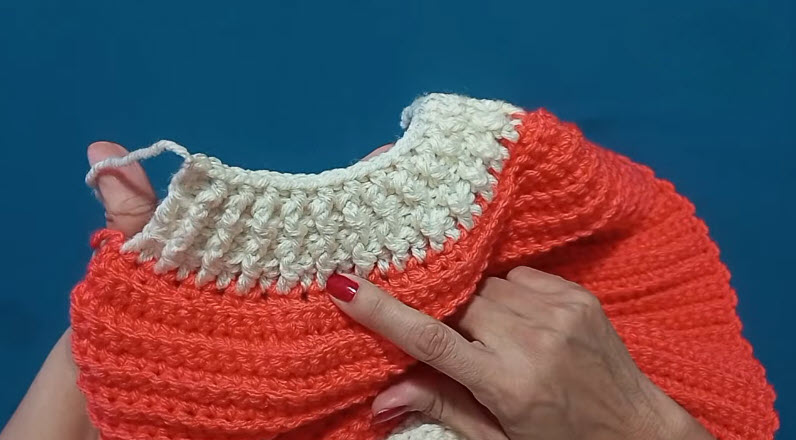
Continue working in your contrast color until the yoke section is complete, shaping the V-neck evenly on both sides. Once finished, weave in all loose ends from both colors to leave the inside neat and comfortable to wear.
Where Can You Use This
This two-tone crochet sweater works well as a casual everyday layer, a cozy piece for fall and winter wardrobes, or a handmade gift for someone who loves color-blocked fashion. It also makes a great addition to a small handmade shop, since the contrast neckline photographs beautifully for product listings.
Why Beginners Will Enjoy This Pattern
Beginners will enjoy how approachable this pattern feels despite its polished, boutique-style look. The stitches themselves are simple and repetitive, and the only new skill involved is the single color change at the yoke, making this a great confidence-building project for anyone ready to move beyond solid-color pieces.
Tips and Tricks for Success
- Block your finished sweater lightly to help the ribbing and yoke lie flat
- Weigh your yarn before starting to make sure you have enough of each color
- Try the contrast color on the cuffs or hem too for a coordinated look
- Keep a small notebook of your row counts to make future sweaters faster to repeat
Why This Crochet Pattern Is Trending
Two-tone and color-blocked crochet pieces have become a favorite among handmade fashion lovers because they combine simplicity with a designer-style visual impact.
- Contrast necklines are a popular styling detail across current knitwear and crochet fashion trends
- The technique is easy to customize with any two-color combination, keeping the pattern fresh every time it’s made
- It photographs well for social media and shop listings, making it popular with sellers as well as hobbyists
Yarn Color Pairing Ideas
- Cream and burnt orange for a warm, autumn-inspired look
- Soft pink and dusty rose for a gentle, monochrome-style contrast
- Charcoal grey and mustard yellow for a bold, modern combination
- Ivory and sage green for a soft, earthy finish
Frequently Asked Questions
Can I make this sweater in one color instead of two?
Yes, you can skip the color change entirely and work the whole sweater in one color if you prefer a simpler, solid-color finish.
What yarn weight works best for this pattern?
A worsted or DK weight yarn works well, giving the ribbing enough structure while keeping the finished sweater soft and wearable.
How do I keep my color-change line straight?
Always switch colors at the same point in the round or row, and keep your tension even so the line doesn’t shift as you work.
Can I adjust the depth of the V-neck?
Yes, you can work fewer or more rounds in the contrast color to make the V-neck shallower or deeper based on your preference.
Is this pattern suitable for a first sweater project?
Yes, the stitches are beginner-friendly, and the single color change is a manageable first step into colorwork for newer crocheters.
Conclusion
This two-tone crochet V-neck sweater pattern shows how one simple color change can completely transform a basic design into something that feels polished and intentional. From the ribbed body to the contrast yoke, every step builds toward a cozy, wearable piece that’s just as fun to make as it is to wear. Whether you are crocheting this for yourself, as a gift, or to sell in your handmade shop, this pattern offers a satisfying balance of easy stitches and standout style. Grab your two favorite colors and give this pattern a try.