Crochet Mexican Duck Amigurumi Pattern with vibrant colors
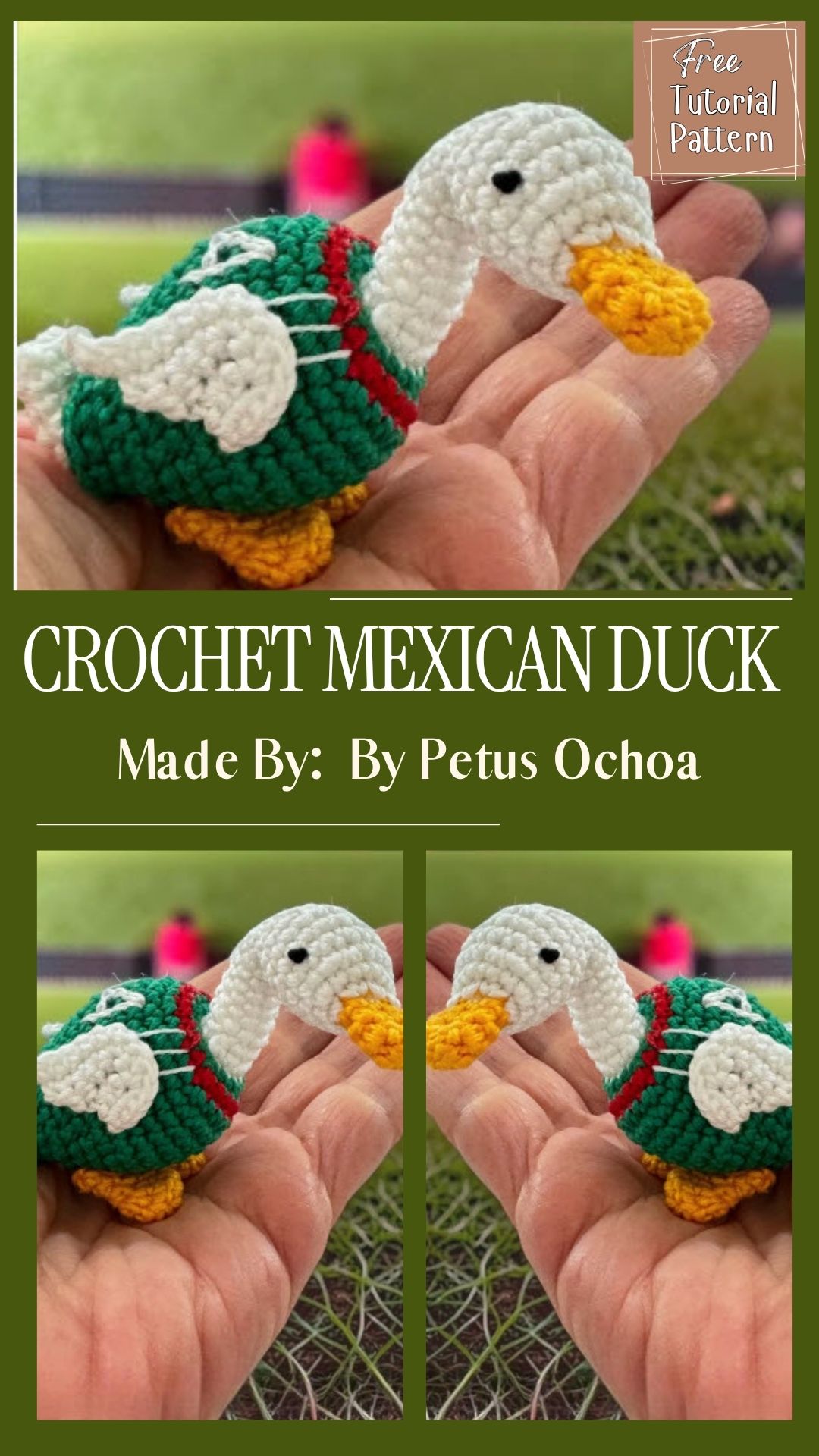
Crochet Mexican Duck Amigurumi Pattern with Vibrant Colors brings together bold green, red, and white shades in one cheerful little bird. Soft curves and a rounded body give it instant charm. Meanwhile, the tiny webbed feet add a realistic touch that beginners can still manage confidently.
This Mexican duck amigurumi stands out because of its layered color story rather than a single flat shade. A fiesta-themed duck plush like this one leans into contrast, pairing a green body with red trim and a crisp white base. Consequently, the finished piece reads as festive without feeling overdone. Crafters often reach for this tricolor amigurumi bird when they want a small project that still delivers a strong visual punch.
Purpose for this pattern: This pattern exists to give makers a compact, colorful amigurumi that celebrates traditional Mexican colors through simple crochet stitches.
The Look and Feel of This Piece
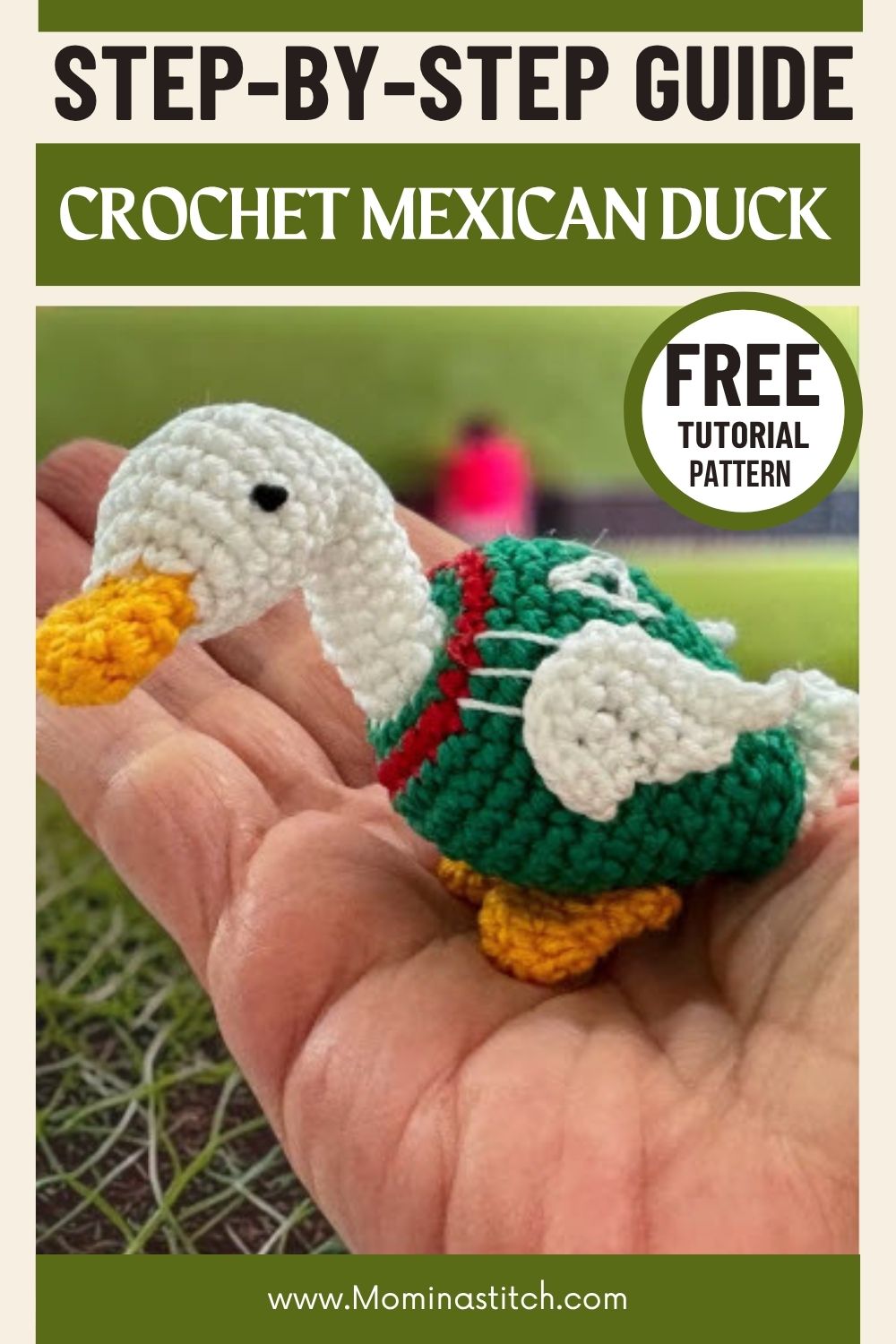
The body sits tall and slightly narrow, built up in smooth rounds of single crochet. Green forms the majority of the upper body, while a thin red stripe breaks up the color block near the base. Below that, white takes over for the lower half, creating a clean tricolor division. Tiny orange webbed feet peek out from underneath, adding personality and a grounded, standing pose. Altogether, the texture stays tight and even, since amigurumi work relies on dense stitching to hide the stuffing underneath.
Materials Needed
- Worsted weight cotton or acrylic yarn in green, red, white, and orange
- A crochet hook sized to match the yarn (typically 2.5mm–3mm for amigurumi)
- Polyester fiberfill stuffing
- Yarn needle for weaving in ends and assembly
- Stitch marker or scrap yarn to track rounds
- Small scissors
- Optional safety eyes for the face
Techniques Used
This build relies on a handful of core amigurumi techniques. First, the magic ring starts every piece without leaving a visible hole. Next, single crochet stitches worked in a continuous spiral shape the rounded body. Increases and decreases control the curves at the top and bottom of each section. Additionally, color changes happen mid-round to keep stripe transitions crisp. Finally, whip stitching or ladder stitching joins the smaller pieces, like the feet, to the main body without a bulky seam.
Making It – 3 Visual Stages
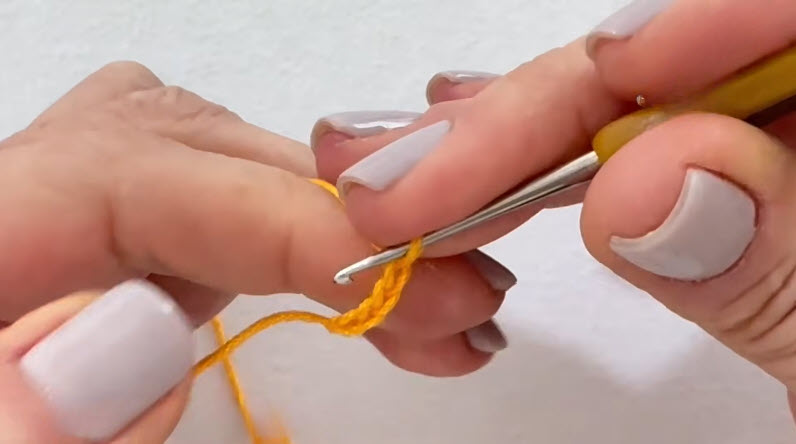
Step 1: Starting the Foundation
Work begins with the orange yarn wrapped around the crochet hook, forming the very first loop of the magic ring. The hook pulls through a small starting chain, laying the groundwork for the first round of stitches.
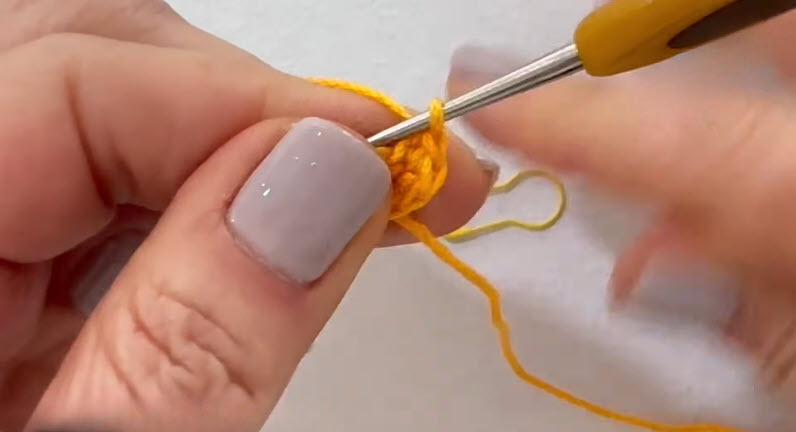
Step 2: Building the First Round
A handful of single crochet stitches are worked directly into that opening ring, and the loose tail is left hanging to the side. At this point, the piece still looks flat, almost like a tiny knot rather than a shaped foot.
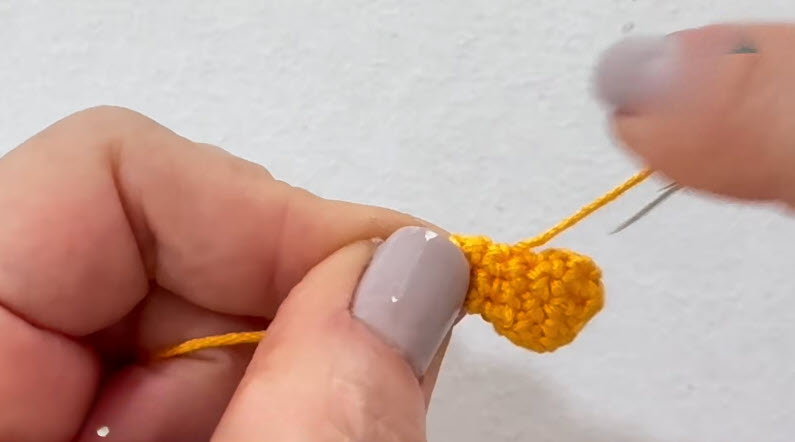
Step 3: Finishing the First Foot
The rounds continue upward until the stitches close into a small, rounded foot shape. The working yarn is pulled through the last loop and left with a tail long enough for sewing later.
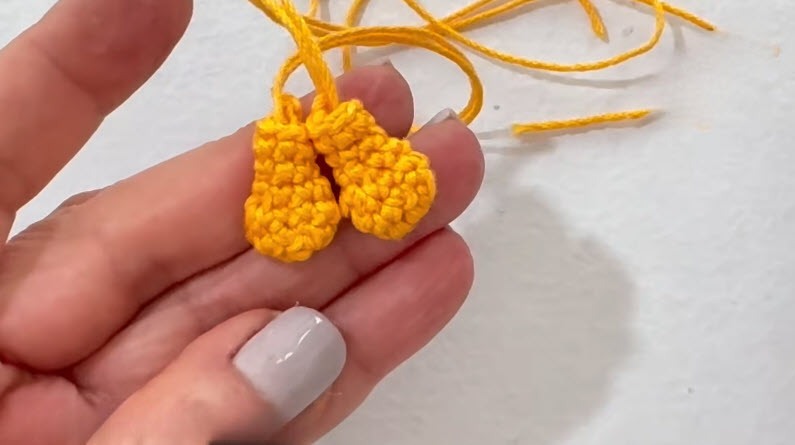
Step 4: Completing the Matching Pair
A second foot is crocheted using the same steps, so both pieces end up identical in size and shape. The two orange webbed feet rest side by side, ready to be attached to the main body.
Step 5: Attaching to the Body
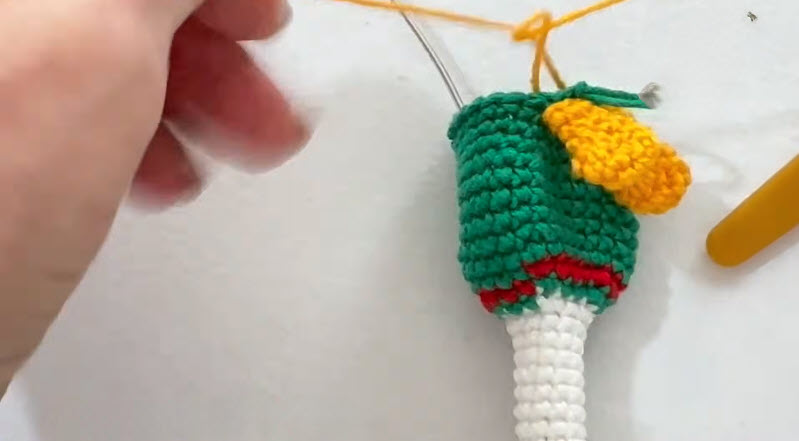
The finished feet, along with a small wing piece, are sewn onto the green, red, and white body using a yarn needle and the leftover tail. This final step brings all the separate pieces together into one complete, standing amigurumi duck.
Common Mistakes
New crocheters sometimes pull the magic ring too loose, which leaves a visible gap at the center of the foot or body. Uneven tension between rounds can also cause the body to curve rather than sit straight. Another frequent slip involves changing colors mid-stitch instead of on the last pull-through, which creates a messy, jagged stripe line. Lastly, skipping stitch markers often leads to losing track of the round count, so the shaping ends up off.
Color and Yarn Variations to Try
Although green, red, and white capture the classic Mexican flag palette, other combinations work just as well. A blue, white, and gold version could echo a different regional flag theme. Alternatively, swapping the orange feet for black creates a bolder, more graphic contrast. Pastel versions, using soft mint and blush instead of saturated tones, soften the whole design for a nursery-friendly look. Variegated yarn, too, can replace one solid color to add subtle texture without extra effort.
Styling Ideas for the Home
Small amigurumi pieces like this duck work well as shelf accents, especially grouped with other tricolor or fiesta-themed decor items. A cluster of three or four ducks in varying sizes creates a charming vignette on a windowsill or bookshelf. Some crafters attach a loop of yarn to the back and hang the piece as a small ornament. Others tuck it into a woven basket alongside other handmade toys for a cohesive, textured display.
Best Occasions or Settings to Use This
This piece suits a Cinco de Mayo gathering, a themed birthday party, or any celebration centered on Mexican heritage and culture. It also works as a small gift for someone who collects colorful amigurumi animals. Because the scale stays compact, it travels easily as a party favor or a stocking-stuffer-style surprise. Craft fairs and market stalls, too, benefit from having a few of these on display, since the bright palette tends to catch a shopper’s eye quickly.
Beginner-Friendly Tips
Beginners should count stitches at the end of every round before moving forward. Using a stitch marker consistently prevents confusion about where each round starts. It also helps to practice the magic ring separately a few times before starting the actual piece, since a loose ring can throw off the whole base. Stuffing a little at a time, rather than all at once, keeps the shape rounder and avoids lumps.
Why This Style Is Trending
Bright, culturally inspired amigurumi has gained traction as makers look for projects with more personality than a plain single-color toy. This Mexican duck amigurumi taps into that shift by combining recognizable colors with a familiar animal shape. Three reasons explain its growing popularity:
- It celebrates a specific culture through color rather than complex imagery.
- The small scale makes it approachable for crocheters with limited time.
- It photographs well for social sharing, since the color blocking reads clearly even in small thumbnails.
Pairing Ideas
This duck pairs naturally with other small animal amigurumi worked in similar palettes, such as a matching chick or turtle. A tiny sombrero or maraca accessory, crocheted separately, could also be added for extra thematic detail. For a coordinated set, crafters might build a second duck in a contrasting color story to display the two side by side.
Last Thoughts
Overall, this Mexican duck amigurumi offers a satisfying blend of simple technique and striking color work. Its compact size makes it manageable in a single sitting or two, yet the finished result still carries plenty of visual interest. Whether displayed solo or grouped with other fiesta-themed pieces, it brings warmth and personality to any shelf or gift box.