Gorgeous Crochet Sweater Pattern for Everyday Elegance
Soft fibers gather into loops as a Gorgeous Crochet Sweater Pattern for Everyday Elegance takes its first shape on the hook. Light, airy, and endlessly wearable, this design brings texture and comfort together in one project. Beginners and seasoned makers alike find it approachable.
A well-built crochet sweater pattern earns its place in a rotation because it balances open stitch work with structure. This particular design uses a breathable mesh-style texture, so it drapes rather than stiffens. Consequently, it suits both cool mornings and breezy evenings. Alternative names for this technique include the v-stitch weave and the lattice crochet method, both of which describe the diamond-shaped gaps formed between double crochets. The result reads as polished, not homemade, which is exactly the goal here.
The Look and Feel of This Piece
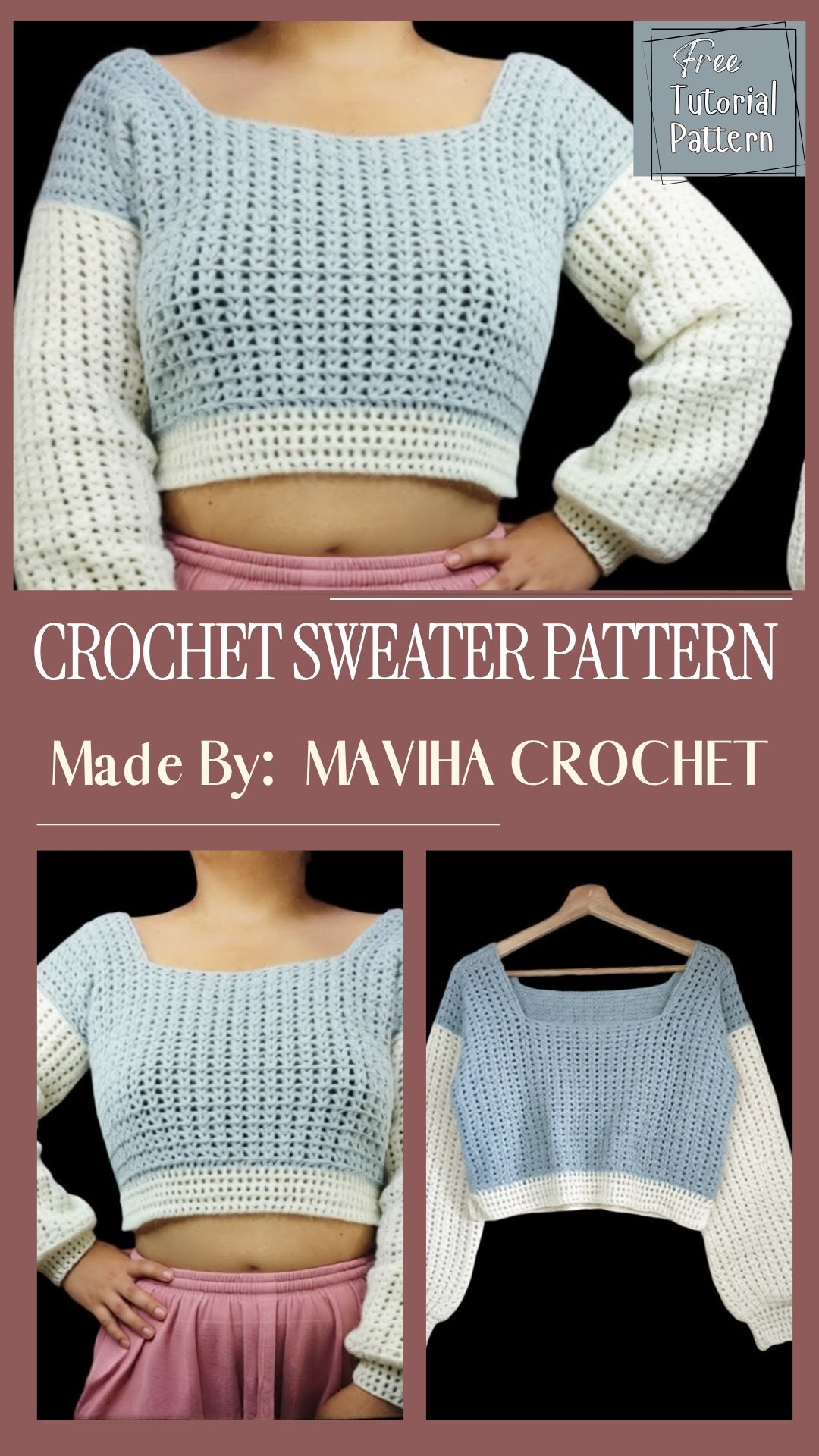
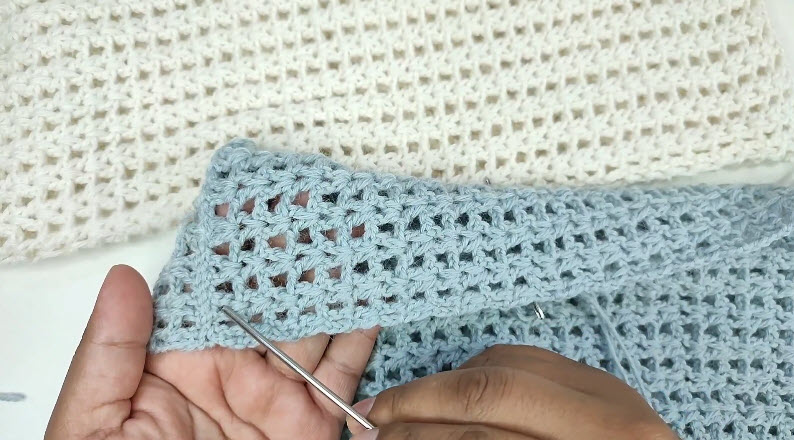
Visually, the fabric presents a soft grid of open diamonds framed by clusters of stitches. Because the stitch pattern repeats evenly, the surface stays consistent from hem to shoulder. The crochet sweater pattern relies on spaced double crochets and chain gaps, giving it a lacy quality without sacrificing warmth. When held up to light, the mesh lets air pass through, yet the yarn weight keeps it substantial enough for layering. Edges finish cleanly, and the seam lines where panels connect add a subtle ridge that reads as intentional detailing rather than an afterthought.
Materials Needed
Before starting, gather a few essentials so the process moves smoothly.
- Medium-weight cotton or cotton-blend yarn in two coordinating shades
- A crochet hook sized to match the yarn label, typically 4mm to 5mm
- Yarn needle for weaving in ends
- Stitch markers to track panel edges
- Small scissors for trimming
Techniques Used
Several core techniques come together to build this garment. A foundation ring or chain starts each panel, after which double crochets and chain spaces alternate to form the mesh. Panels are worked flat, then joined using a slip stitch seam along matching edges. Additionally, a whip stitch or mattress stitch can be used for a nearly invisible finish where two colors meet. Because the stitch count stays even throughout, tension control matters more than stitch complexity here.
Making It – 5 Visual Stages
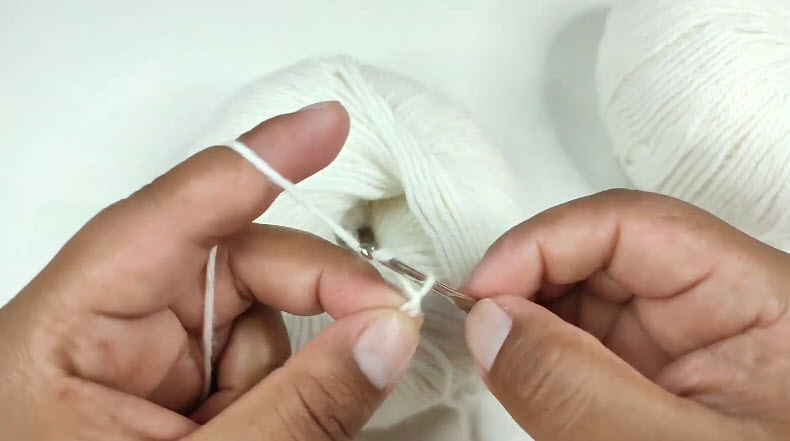
Step 1 – Create the Foundation Loop
Wrap the yarn around the finger to form a small ring, then insert the hook through the loop to set up the slip knot foundation. This step establishes the base for the entire pattern
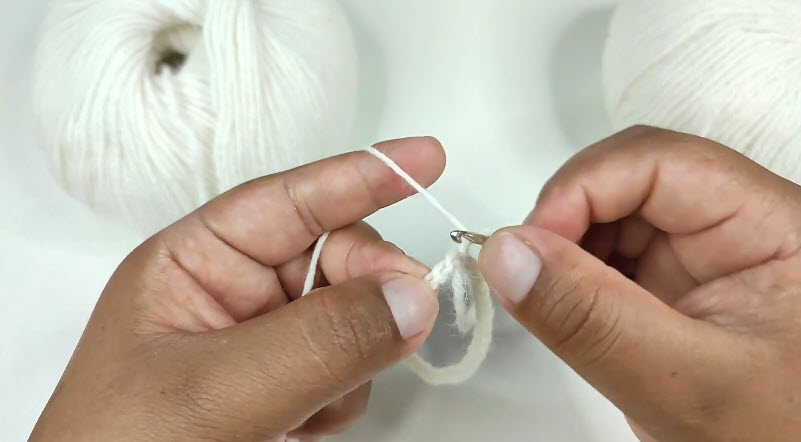
Step 2 – Close the Ring
Pull the yarn through with the hook and complete the chain stitches to close the ring. This allows the stitches of the first round to distribute evenly.
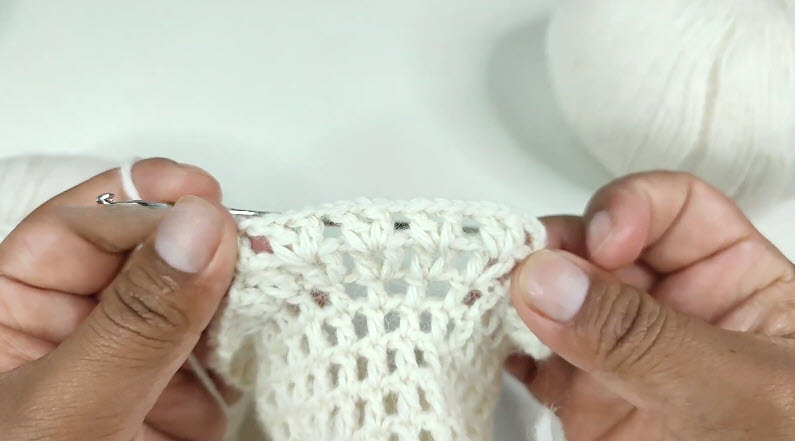
Step 3 – Build the Mesh Rows
Insert the hook into the established fabric and continue the repeat of double crochets and chain spaces. This step builds the diamond-shaped mesh texture row by row.
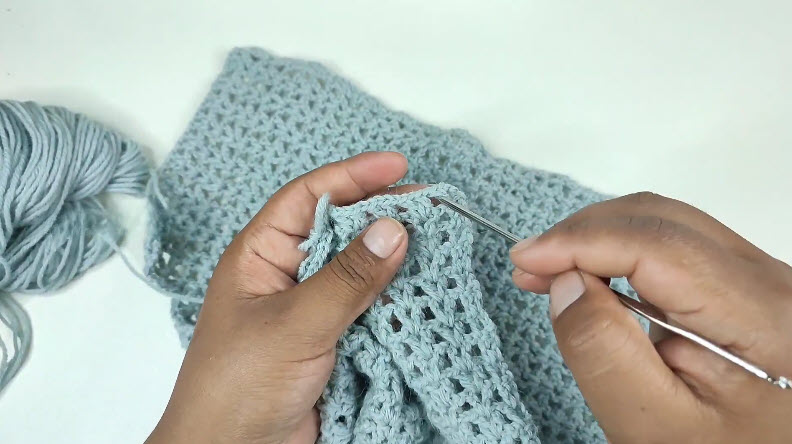
Step 4 – Switch Color and Continue
Attach the new (blue) yarn shade and continue the same stitch pattern into the edge stitches. This develops both the panel length and the second-color contrast.
Step 5 – Join the Panels
Align both panels (cream and blue) side by side and seam them together through matching stitch tops with the hook. This final step merges the two textures into one continuous piece.
Common Mistakes
A few missteps tend to show up repeatedly, but each one is easy to avoid with a little attention.
- Miscounting chain spaces, which throws off the diamond alignment
- Pulling stitches too tight, causing the mesh to lose its drape
- Joining panels with mismatched row counts
- Skipping a gauge swatch before committing to the full project
Color and Yarn Variations to Try
Switching yarn weight changes the entire feel of this design. A crochet sweater worked in DK-weight cotton produces a lighter summer piece, while a worsted-weight wool version leans warmer for colder months. Two-tone combinations, like the cream and dusty blue shown in progress, add visual interest at the seam line. Alternatively, a single solid color keeps the focus on the stitch texture itself, letting the diamonds carry the design.
Styling Ideas for the Home
Beyond apparel, this stitch pattern translates well into throw pillow covers, table runners, or lightweight curtain panels. Its open mesh structure allows light to filter through, making it a natural fit for sunroom or reading-nook accents. Smaller swatches of the same technique can also be framed as textile wall art, adding a handmade touch to a neutral space.
Best Occasions or Settings to Use This
This piece fits comfortably into layered outfits for transitional weather, whether paired with a simple tank underneath or worn over a collared shirt. It also works well for casual weekend gatherings, outdoor markets, or relaxed evenings where texture and comfort matter more than formality. Gift-giving occasions benefit from it too, since handmade pieces carry a personal weight machine-made items rarely match.
Beginner-Friendly Tips
New crocheters often worry about maintaining even tension across an open stitch pattern, but a few habits help. Counting stitches at the end of every row prevents drift before it compounds. Using a stitch marker on the first stitch of each row also removes guesswork. Furthermore, practicing the repeat on a small swatch before committing to a full panel builds confidence quickly.
Why This Style Is Trending
Open-mesh textures have grown popular recently because they photograph beautifully and suit a wide range of body types and home aesthetics. People appreciate garments and decor that feel handmade without looking overly rustic, and this stitch pattern hits that balance well.
- Lightweight construction suits year-round wear
- Two-tone joins offer easy customization
- Simple repeat makes it accessible to newer crocheters
Pairing Ideas
Alongside this project, a matching beanie or fingerless mitts worked in the same stitch repeat create a coordinated set. A market tote using the identical mesh pattern also makes a practical companion piece, since the technique scales easily between garment and accessory projects.
FAQ
What yarn weight works best for this pattern?
Medium-weight cotton or cotton-blend yarn generally gives the cleanest stitch definition and the best drape for this design.
Can the two-panel join be made invisible?
Yes, a mattress-stitch seam along the matching-stitch tops creates a nearly seamless transition between panels.
Is this pattern suitable for absolute beginners?
It works well for confident beginners who understand basic double crochet and chain stitches, though a gauge swatch is recommended first.
How much yarn is typically needed?
Amounts vary by size, but two to three medium skeins usually cover a standard adult panel set, plus extra for seaming.
Closing Thoughts
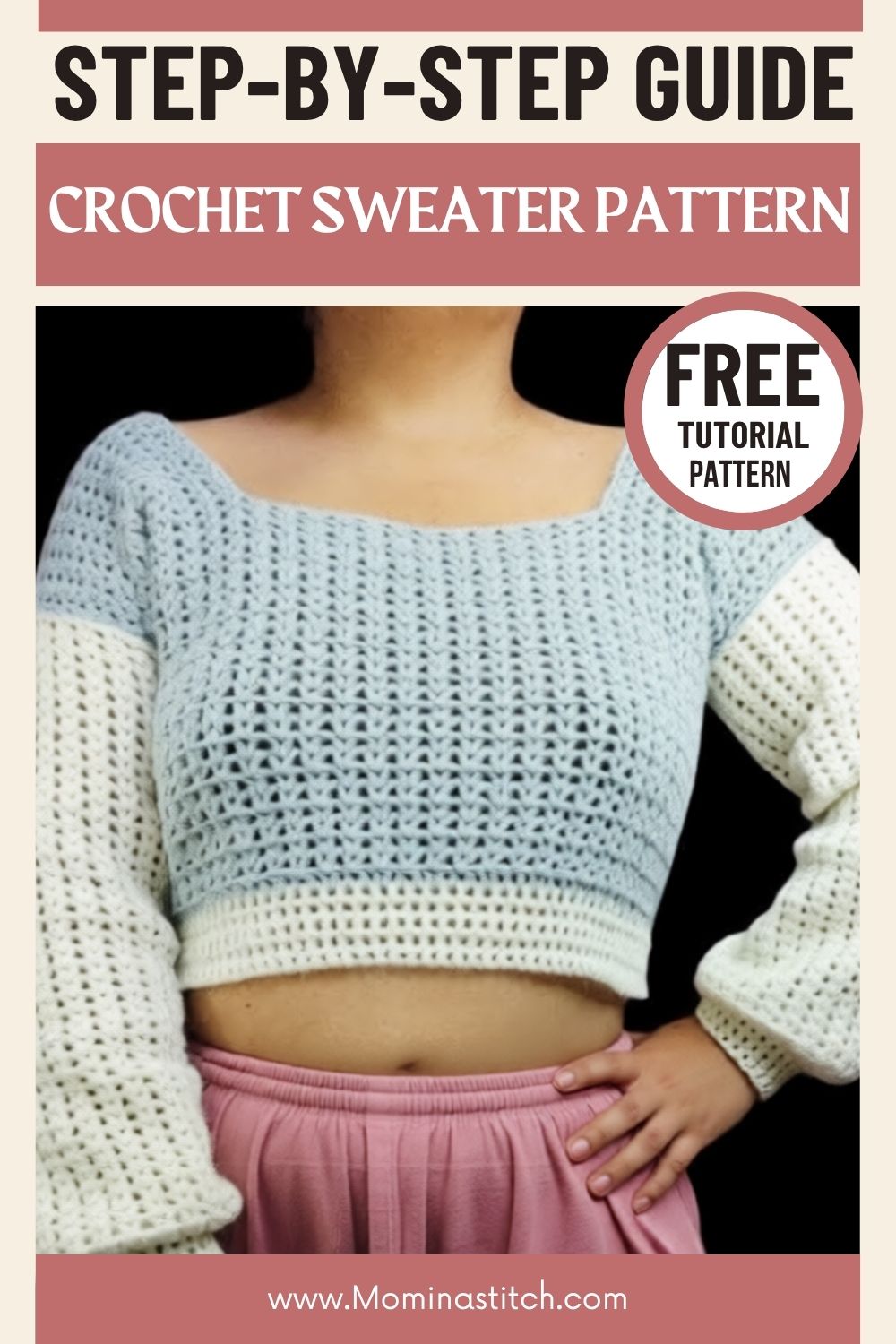
Altogether, this crochet sweater pattern rewards patience with a piece that feels both airy and substantial. Its repeating diamond texture, straightforward join technique, and flexibility across yarn weights make it a satisfying project from first loop to final seam. Whether finished in a single shade or two contrasting colors, it holds up as a versatile addition to any handmade wardrobe rotation.