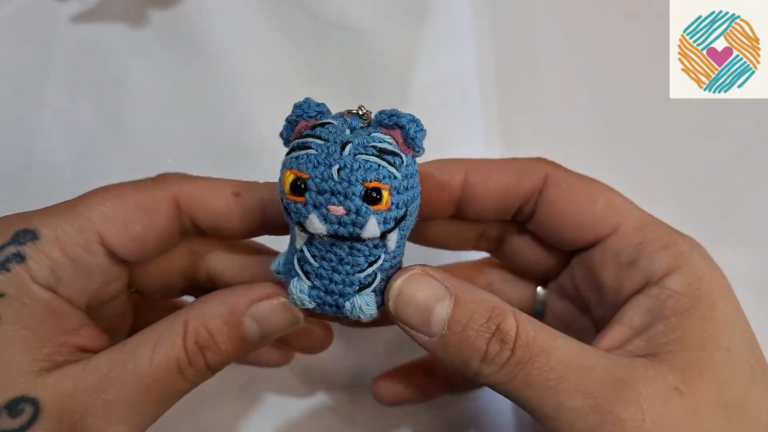
Sophisticated Crochet Pachimari Overwatch Amigurumi Pattern
This pattern guides the creation of a sophisticated crochet Pachimari amigurumi inspired by Overwatch, featuring a rounded body, small fins, and a neat face. The instructions cover materials, stitch counts, shaping, and assembly steps to produce a clean, display-ready plush.
This Sophisticated Crochet Pachimari Overwatch Amigurumi Pattern creates a polished, turnip-shaped character with a smooth head, a clean face panel, and neatly joined green leaf-tentacles. Using classic amigurumi crochet techniques, magic ring, single crochet, and shaped increases/decreases, this project suits makers who appreciate precise stitch definition and tidy finishing.

Once complete, it works beautifully as handmade home decor on a shelf, a custom gift for a game-themed collection, or a refined nursery decor accent. For gifting value, consider personalized gifts and custom plush requests.
Sophisticated Crochet Pachimari Overwatch Amigurumi Pattern
To begin with, this tidy, turnip-shaped amigurumi uses a smooth white body, a clean green “leaf” top, and a simple, balanced face for a polished finish. Next, the pattern keeps the shaping beginner-friendly, so the rounds stay easy to track and the sewing stays manageable. Meanwhile, the design is structured enough to look crisp on a shelf, yet soft enough to feel like a true plush. After that, small leaf-tentacles are added for the signature silhouette. Finally, the face details pull everything together, resulting in a neat, handmade piece for decor, gifting, or collecting.
Materials Required
- Yarn (Type & Weight)
- Main color (White): Worsted weight / Aran (Category 4), 50 g (90–110 m)
- Leaf color (Green): Worsted weight / Aran (Category 4), 20 g (35–45 m)
- Face details:
- Black embroidery floss (or black DK yarn), 1–2 m
- Pink yarn or floss for small blush spots, 0.5–1 m (optional)
- Hook Size
- 3.25 mm (D/3) or 3.5 mm (E/4) crochet hook
(If stitches look loose, then choose the smaller hook.)
- 3.25 mm (D/3) or 3.5 mm (E/4) crochet hook
- Notions
- Safety eyes: 8 mm (or 6 mm for a smaller look)
- Polyester fiberfill stuffing: about 20–30 g
- Stitch marker: 1
- Tapestry needle: 1
- Small scissors
- Accessories (Optional)
- Keychain ring: 25–30 mm
- Jump ring or small swivel clasp: 1
- Strong thread or thin cord for hanging loop: 20 cm
Skill Level
Easy (Beginner-Friendly)
To clarify, this project uses single crochet, increases, decreases, and simple sewing. At the same time, the shaping stays forgiving, which helps beginners stay relaxed while learning.
Making Time (Overview)
Total time: about 2.5 to 4 hours
In general, time depends on comfort with tight tension and neat assembly. First, the body works up quickly, then the leaf-tentacles go fast in a small batch, and finally, the face and sewing take the most careful minutes.
Step-by-Step Instructions
Stitches & Notes (Quick Guide)
- MR = magic ring
- sc = single crochet
- inc = 2 sc in the same stitch
- dec = invisible decrease (recommended)
- Typically, work in continuous rounds unless told otherwise.
- Therefore, use a stitch marker to mark the first stitch of each round.
- Most importantly, keep tension firm so stuffing does not show.
Body (3 Clear Steps)
Making time for this part: 60–90 minutes
Step 1: Start the base and build the round shape
To start, crochet the flat base that will later curve into the body.
- R1: MR, 6 sc (6)
- R2: inc around (12)
- R3: (sc, inc) around (18)
- R4: (2 sc, inc) around (24)
- R5: (3 sc, inc) around (30)
- R6: (4 sc, inc) around (36)
- R7: (5 sc, inc) around (42)
At this stage, the base should look like a shallow bowl. If the circle starts to ripple, then drop a hook size. If it cups too tightlyd loosen the tension slightly.
Step 2: Create the “turnip” sides (straight rounds)
Next, build height while keeping the stitch count steady.
- R8–R14: sc around (42) for 7 rounds
Meanwhile, check stitch consistency every couple of rounds. In addition, keep the marker moving so the start of the round does not get lost.
Step 3: Shape the top and close neatly
After the straight section, the piece is narrowed for a gentle, turnip-like top.
- R15: (5 sc, dec) around (36)
- R16: (4 sc, dec) around (30)
- R17: (3 sc, dec) around (24)
- R18: (2 sc, dec) around (18)
- Now begin stuffing firmly, then shape the body into a soft oval/turnip form.
- R19: (sc, dec) around (12)
- Next, add more stuffing, and then smooth the top with fingertips so it stays rounded, not pointy.
- R20: dec around (6)
- Finally, fasten off, leave a tail, and close the opening by threading through the front loops of the last 6 stitches.
Later on, the leaf-tentacles will be attached near the top. Therefore, keep the closing seam centered and as tidy as possible. Additional Parts
Tentacles (Leaf-Tentacles Set)
Making time for this part: 30–45 minutes
To begin with, these small green pieces create the signature crown. First decide how many to make: 6 tentacles looks balanced, while 8 tentacles looks fuller and more layered. In either case, keeping sizes consistent matters most.
Option A (Recommended): 6 Leaf-Tentacles
Leaf-Tentacle (make 6)
- R1: MR, 6 sc (6)
- R2: (sc, inc) around (9)
- R3–R5: sc around (9) for 3 rounds
- R6: (sc, dec) around (6)
- Optionally, lightly stuff the base only.
- Then fasten off and leave a long sewing tail.
Next, pinch the top slightly so it reads as leaf-like. Meanwhile, keep the stitches tight so the ends do not flare open.
Option B: 8 Leaf-Tentacles
Alternatively, follow the same steps and make 8 instead of 6. After that, place them closer together so the crown looks fuller.
Accessories / Details (Optional)
Making time for this part: 10–20 minutes
1) Hanging loop for a keychain
- First,t cut 20 cof m strong thread or thin cord.
- Next, fold it in half and knot near the ends to form a loop.
- Then thread the knot into the top of the body with a tapestry needle.
- Finally, attach the keychain ring using a jump ring or directly through the loop.
As a result, the amigurumi becomes a practical bag charm or small gift add-on.
2) Simple felt face panel (optional upgrade)
- First,t cut a small, well-rounded oval of white or light cream felt, about 3–3.5 cm wide.
- N, ext pin it to the front of the body.
- Then stitch it lightly in place before adding eyes.
In fact, this small panel can make the face look extra crisp, especially on tightly stitched fabric.
Face & Assembly
Making time for this part: 30–50 minutes
1) Eye placement (safety eyes)
- First, first choose the front of the body where the rounds look most even.
- Next, place the eyes between Rounds 10 and 11, about 6–7 stitches apart.
- Then check the expression before locking the backs:
- Ifthe eyes are closer, the look becomes cuter and simpler.
- If eyes are wider, the look becomes calmer and more refined.
- Finally, secure the washers firmly.
For best results, pin the eyes in place first. Then step back and view from a distance. After that, commit once the face looks balanced.
2) Embroider the mouth
- To begin, thread black floss or thin black yarn.
- Next, place the mouth 1–2 rounds below the eyes, centered.
- Then make a small “u” or gentle curve with a few short stitches.
- Finally, tie off inside the body and hide ends through the stuffing.
As a gentle guideline, keep the mouth small. Otherwise, the expression can look too bold on a compact face.
3) Optional blush
- First, to use pink floss or yarn.
- Next,xt adds two tiny diagonal stitches on each side of the mouth.
- Then stop early rather than adding more a subtle blush usually looks cleaner.
4) Attach the leaf-tentacles
- First, arrange the tentacles in a circle on the top area (near the closed end).
- Next, pin them evenly:
- For 6 tentacles, space them like clock positions (12, 2, 4, 6, 8, 10).
- For 8 tentacles, space them more tightly (every 4–5 stitches).
- Then sew each base securely with whip stitches, catching body stitches beneath.
- Finally, weave ends inside and trim.
To keep the crown centered, sew one tentacle, then sew the opposite one. After that, fill in the remaining spaces.
Special Features
- Smooth, structured body: Because the stitches are tight and the stuffing is firm, the surface looks clean and polished.
- Refined leaf crown: Since the tentacles are small and repeated, the top looks layered without complicated shaping.
- Simple expression: Although the face is minimal, it still reads clearly from across a room.
- Compact display size: Therefore, it fits neatly on desks, shelves, and small decor trays.
Sizing Tips
- With worsted yarn + 3.25–3.5 mm hook, the height is usually 10–12 cm (without a keychain).
- With DK yarn + 2.75–3.0 mm hook, the size becomes 8–10 cm, and the look turns more delicate.
- With plush/chenille yarn, the plush becomes larger and softer; however, stitch counting can be harder.
In addition, hook size affects firmness as much as yarn choice does. For example, a smaller hook makes tighter fabric and sharper shaping, while a larger hook makes a softer silhouette.
Finishing Tips
- First, use invisible decreases so the body stays smooth instead of dimpled.
- Next, stuff in layers: add a little, shape it, and then add more.
- Then close the top cleanly by threading through the front loops only and pulling tight.
- After that, sew attachments with small, even stitches so seams disappear.
- Finally, gently roll the finished piece between your hands to even out the stuffing and soften the edges.
As a final check, look at the piece from the front, sides, and top. Then adjust the crown or face embroidery before trimming all tails.
Common Mistakes to Avoid
- Loose stitches that show stuffing
If fibers peek through, then switch to a smaller hook or tighten tension. Also, choosing white stuffing helps keep the surface clean. - Skipping the stitch marker
Without a marker, rounds drift. As a result, eye placement becomes guesswork. Therefore, mark the first stitch every round. - Overstuffing the top
Too much stuffing near the closing seam creates a point. Instead, keep the top firm but rounded, and then close slowly. - Eyes placed too high or too far apart.
If the face looks surprised, movethe eyes one round lower. If it looks blank, bring your eyes closer by a stitch or two. Before locking, test placement with pins. - Uneven tentacle spacing
If the crown looks lopsided, it often comes from sewing without pinning. So first pin all pieces, then sew opposite pairs, and finally fill the gaps.
Variations & Customization Ideas
- Color changes
- First try white + bright green for a classic look.
- Next, try cream + sage for modern handmade decor palettes.
- Then try mint + deep emerald for bold contrast and a themed gift style.
- Size options
- For a mini keychain, use DK yarn and 6 mm eyes.
- For a desk plush, use worsted yarn and 8–10 mm eyes.
- For a larger display plush, use bulky yarn; however, keep counts slow and careful.
- Expression ideas
- Add tiny eyebrows for a calmer, “thoughtful” look.
- Alternatively, widen the smile slightly for a brighter expression.
- Finally, embroider the eyes instead of using safety eyes for a child-safe version.
- Theme ideas
- FFirstt add a small bow or scarf for a gift-ready finish.
- Next, stitch initials on the back for a personalized touch.
- Then add simple leaf veins with embroidery for extra refinement.
Tutor Suggestions FOR (Crochet Pachimari Overwatch Amigurumi)
- First focus on tension, then focus on speed
Tight stitches matter most at the start. After that, speed arrives naturally. - Count after every round
Even one missed increase changes the shape later. Therefore, count before moving on, especially in the early rounds. - Pin every detail before sewing.
Eyes, mouth, and tentacle spacing all improve with a quick test fit. As a result, less unpicking is needed. - Aim for an invisible seam.s
When attaching pieces, keep stitches small and consistent. Then the joins blend into the fabric. - Practice the invisible decrease on scrap yarn.
If decreases look bumpy, practice briefly first. Next,t return to the project once the motion feels smooth. - Finish slowly for a clean final look.
The last minutes make the biggest difference. Finally, weave in ends, smooth the shape, and check symmetry from every angle.
To sum up, this Sophisticated Crochet Pachimari Overwatch Amigurumi Pattern stays simple enough for beginners, yet it finishes with a clean, display-ready look. First,rst crochet the body, then add the leaf-tentacles, and finally complete the face for a crisp, character-inspired result.