Crochet Popcorn Garland with Beads Christmas Decoration Pattern
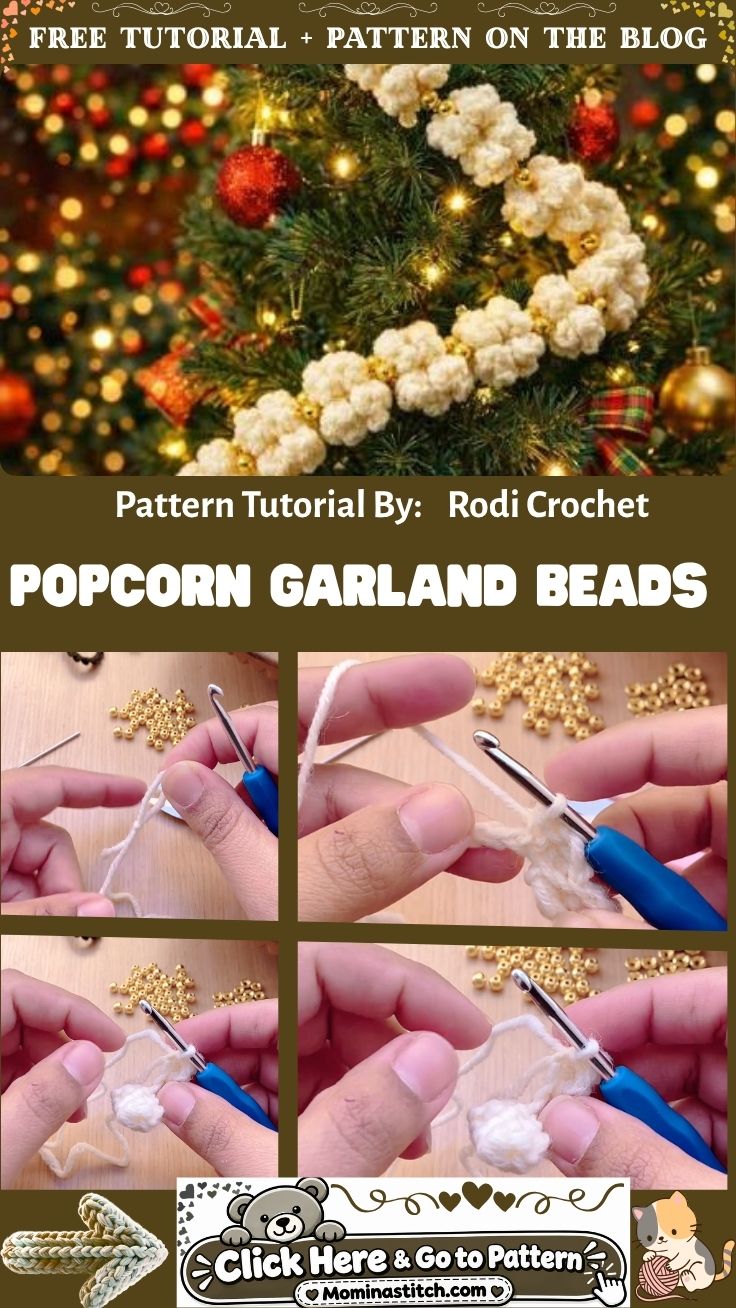
Soft white popcorn clusters and scattered gold beads open the Crochet Popcorn Garland with Beads Christmas Decoration Pattern. The project builds from repeated popcorn stitches and simple bead threading. Each bump adds texture, and the beads add a quiet holiday shine.
Few Christmas crafts blend structure and shine as easily as a beaded popcorn stitch garland. The crochet popcorn garland technique relies on stacked loops pulled through one stitch. As a result, each bump takes on a rounded, textured shape unlike basic single crochet. Threading gold beads between the popcorn balls adds a festive holiday accent. The finished strand photographs well, too, and holds its shape season after season.
The garland exists to turn popcorn stitches and beads into a hangable string of holiday texture.
What Is This Pattern?
A crochet popcorn garland with beads links small, rounded popcorn clusters along a length of chain. Beads slip in between each cluster. The stitch itself stays simple: several loose loops worked into one spot, then drawn together into a tight, puffy dome. Once dozens of domes sit in a row, the strand reads like a garland of tiny snowballs. Because the beads sit between clusters rather than inside them, they catch light without adding bulk. As a result, the finished strand suits a mantel, a small tree, or a wreath equally well.
What Do You Need to Make It?
A short materials list keeps the project approachable. Gather worsted weight yarn in white or cream, plus a 4mm (G-6) crochet hook. Two sizes of gold beads work well, similar to the round and seed beads used in most popcorn garland kits. A yarn needle helps weave in loose ends. Meanwhile, a fine wire threader makes stringing seed beads onto yarn far easier. Scissors and a stitch marker round out the list. A small bowl also keeps beads from scattering while stitches are worked.
What Skills Does It Require?
Because the pattern repeats one stitch cluster many times, only a handful of skills matter. A crocheter needs to chain, work a basic popcorn stitch, close a cluster evenly, and fasten off cleanly. Threading beads onto yarn ahead of time counts as a small extra skill. Still, it takes only minutes to learn. Once the popcorn stitch feels comfortable, the rest of the garland becomes mostly repetition.
How Long Does It Take?
Prep work, meaning threading beads and winding yarn, usually takes ten to fifteen minutes. Each popcorn cluster stitches up in roughly two to three minutes once the technique clicks. A garland with forty clusters, therefore, takes two to three hours of active stitching. Finishing touches add another fifteen minutes, since ends need weaving in and beads need even spacing. Most crocheters finish a full-length garland in a single relaxed afternoon.
What’s the Process Like?
Building a crochet popcorn garland happens one cluster at a time. The steps below follow the actual stages of forming a single popcorn ball, start to finish.
Step 1: Set Up the First Loops
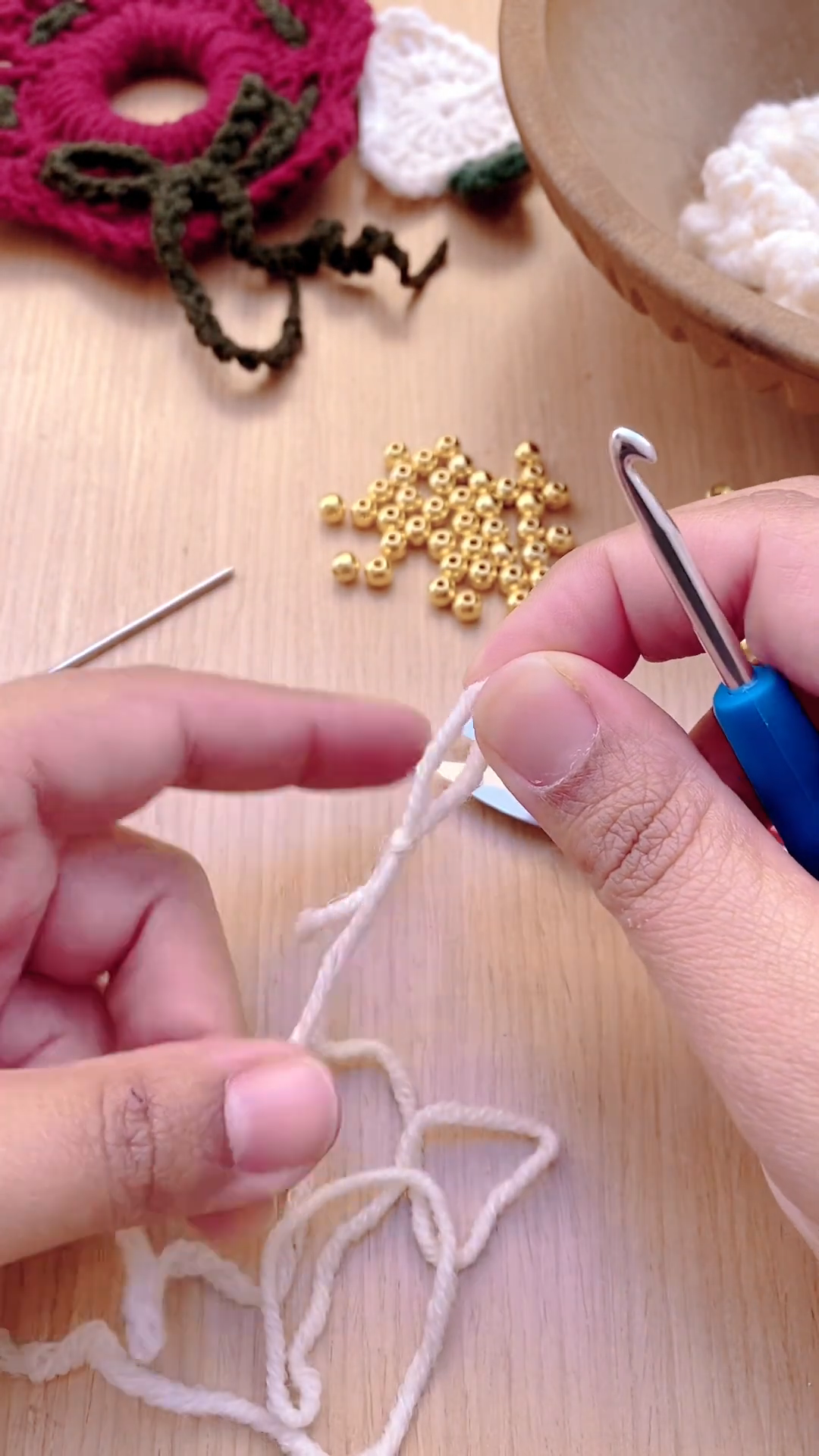
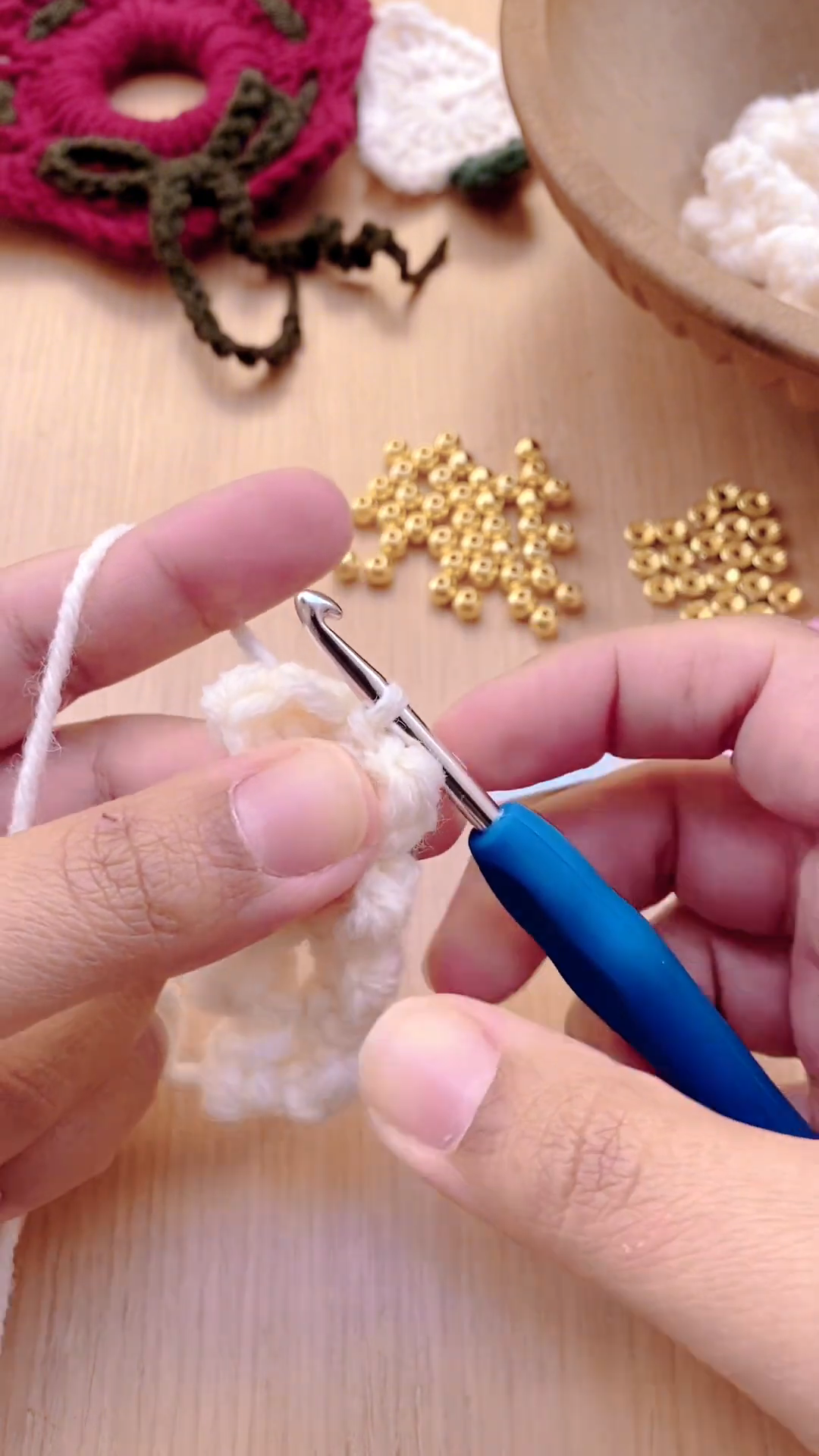
Work begins with a slip knot and a short yarn tail. The hook holds the first loops that will fill out one rounded cluster. Beads sit nearby in a small pile, ready to thread on once the clusters are finished.
Step 2: Anchor the Base Stitch
The base of the first popcorn sits pinched between finger and thumb. Meanwhile, the hook holds the loops that give the cluster its shape. Keeping the base steady here helps the finished bump sit evenly, rather than leaning to one side.
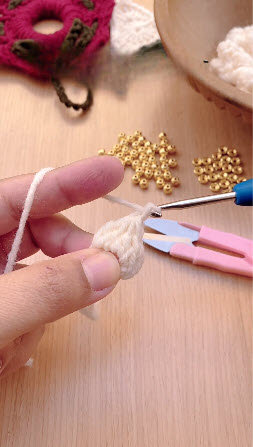
Step 3: Draw the Loop Back Through
The hook slips back into the base stitch. It then draws a loop through the gathered stitches, pulling the loose loops closer together. Once the loop travels through cleanly, the cluster starts taking on its rounded outline.
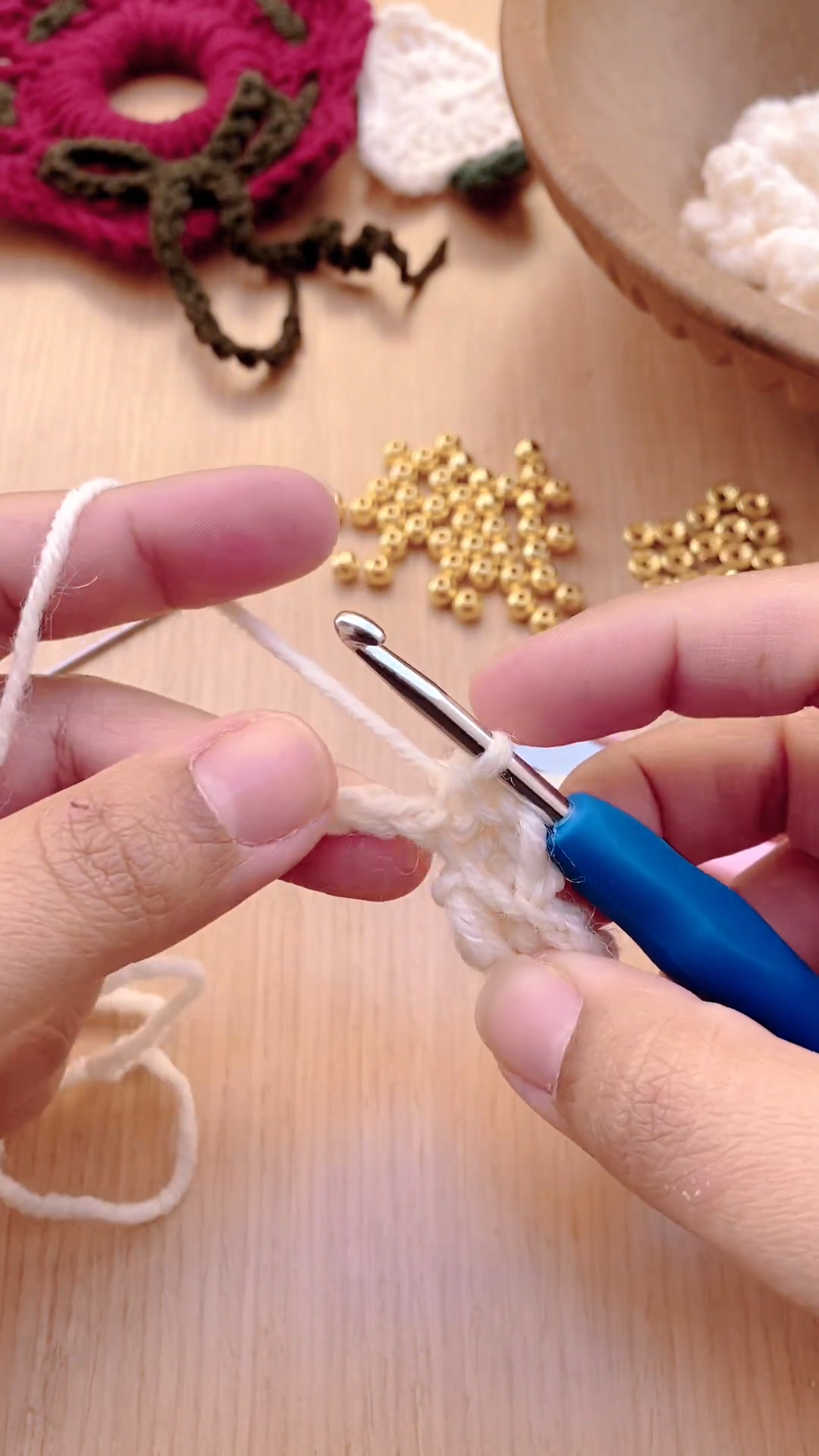
Step 4: Wrap for Volume
The yarn wraps around the hook several times in a row. These wraps build up the loops that give the popcorn its full, puffy volume. More wraps at that stage produce a plumper bump once the stitch closes.
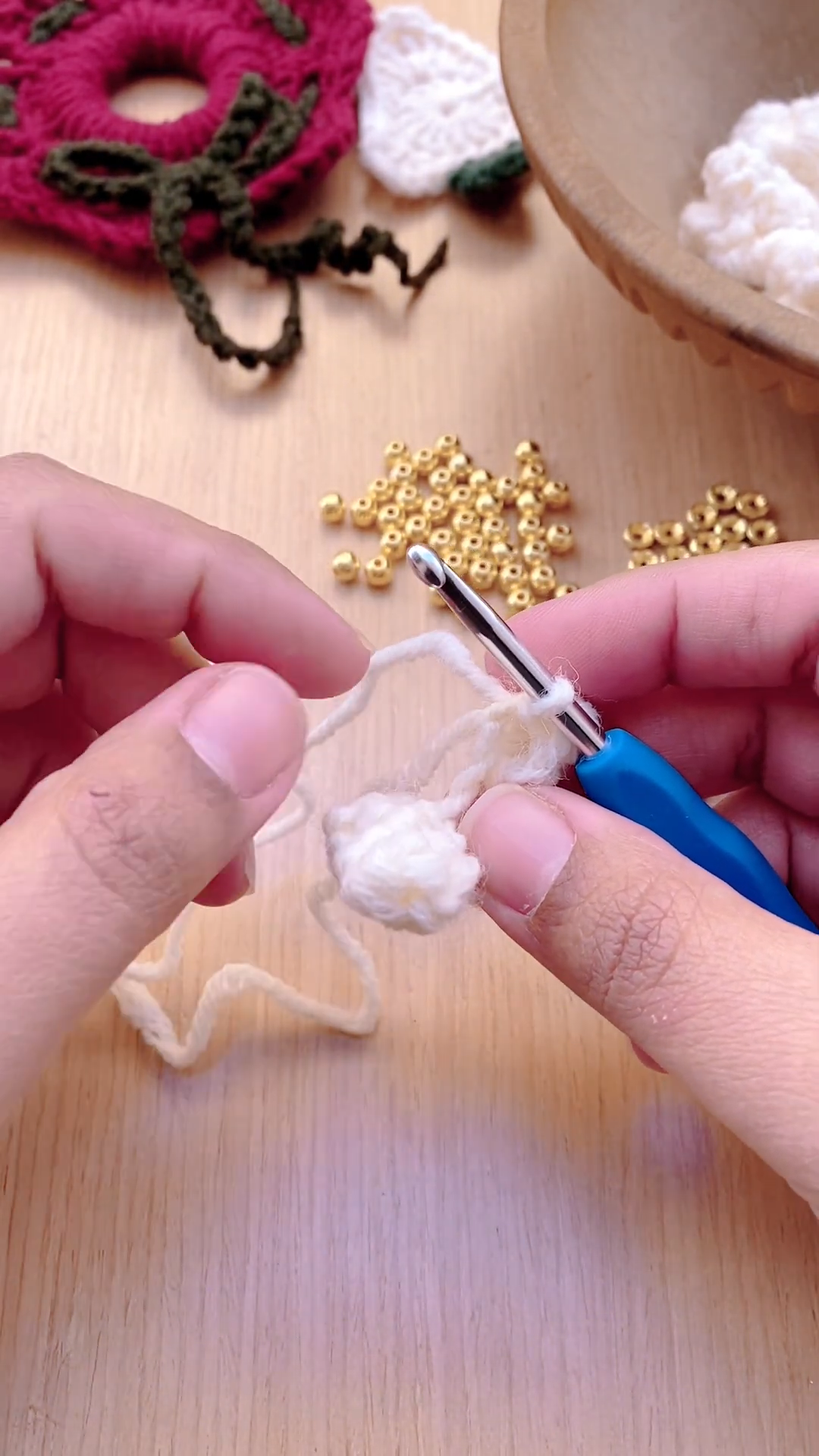
Step 5: Keep the Tension Even
With the wrapped loops sitting on the hook, even tension across each wrap keeps the cluster round instead of lopsided. A relaxed grip on the yarn, rather than a tight one, tends to give the neatest results.
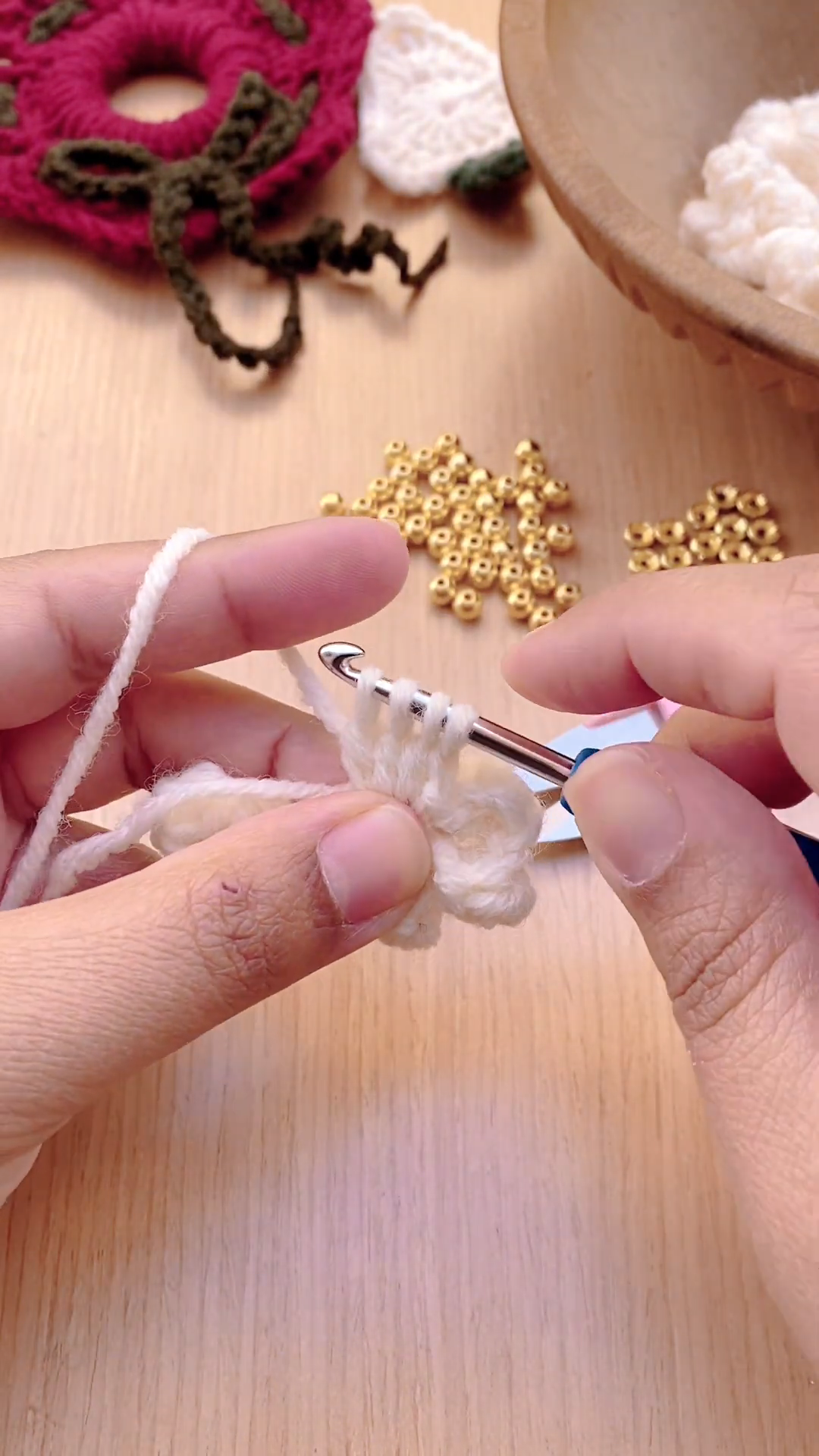
Step 6: Close the Cluster
Pulling the working yarn through the gathered loops closes the popcorn stitch. Doing so locks its rounded shape into place. Once closed, the cluster holds its dome shape without further shaping.
Step 7: Line Up the Finished Clusters
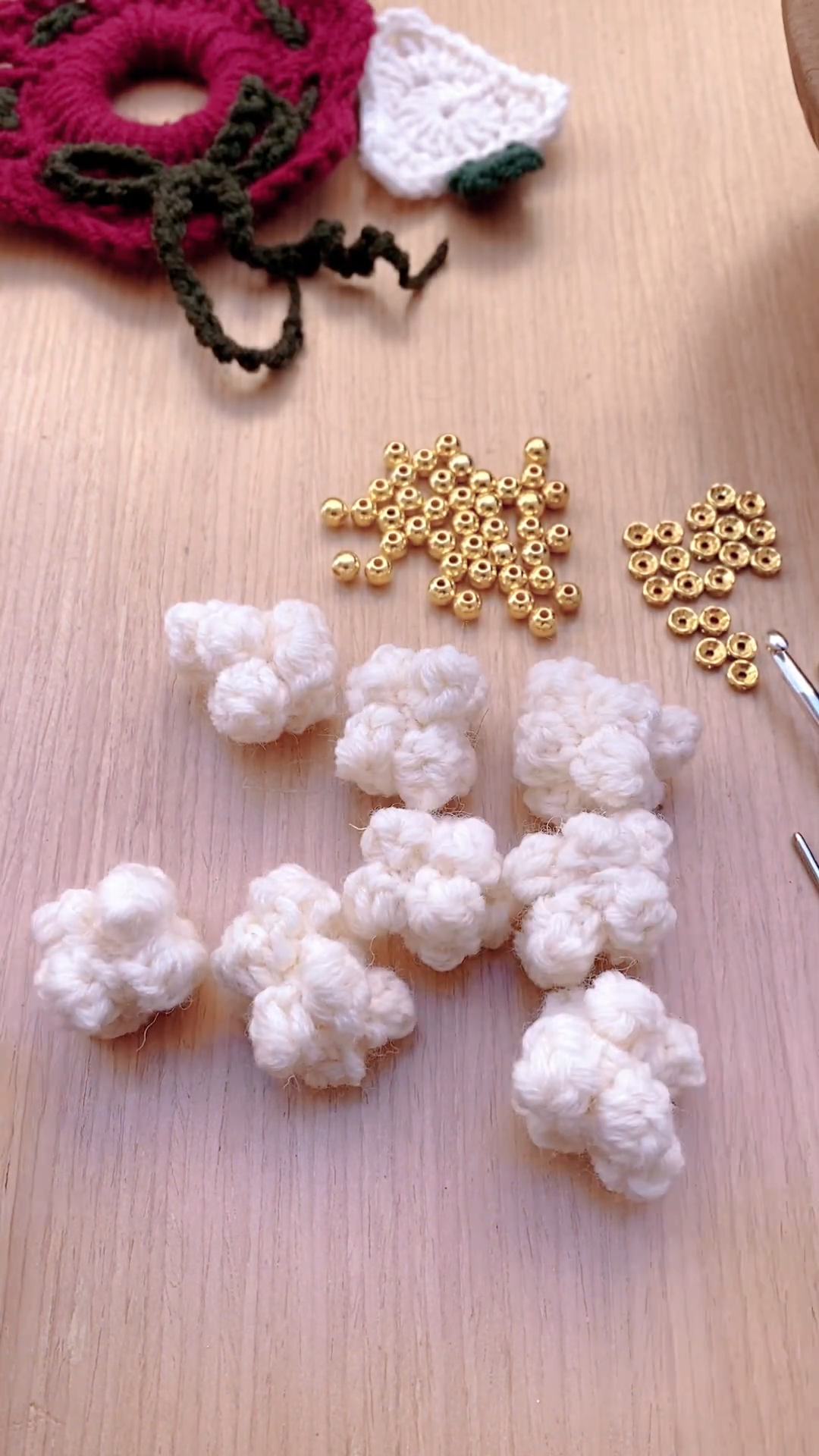
Repeating the sequence produces several finished popcorn balls. These line up side by side before beads join the strand between them. At that point, the clusters and beads sit ready for final assembly.
What Usually Goes Wrong?
A handful of small issues show up often in early attempts at the pattern. Popcorn clusters sometimes end up mismatched in size, since the number of wraps varies from stitch to stitch. Loose closing stitches leave visible gaps at the base of the dome. Beads, meanwhile, occasionally slide out of position along the strand. Some crocheters also lose track of stitch count partway through, and that throws off spacing between clusters.
How Can Mistakes Be Avoided?
Most of these problems have simple fixes once caught early. Counting wraps out loud, or using a consistent number each time, keeps clusters uniform in size. A snug closing stitch, pulled firmly rather than loosely, seals the base of each dome cleanly. Threading beads in the intended order before stitching begins also prevents mid-project scrambling. A stitch marker placed every ten clusters helps track spacing on a longer garland, too.
What Can This Piece Be Used For?
A finished popcorn garland with beads suits far more than a single spot on a Christmas tree. Crafters often drape it along a mantel or loop it around a staircase railing. Some pin it across a doorway for a festive entrance instead. Smaller lengths tuck neatly into a gift box as a handmade topper. Longer strands, meanwhile, wrap several times around a tree without looking sparse.
Is It a Good Project for Beginners?
Yes, with a small amount of patience for the first few clusters. The popcorn stitch takes longer to feel natural than basic single crochet. Even so, most beginners settle into it within the first ten repetitions. Since the pattern relies on repetition rather than complex shaping, confidence builds quickly once several clusters look consistent.
What Makes It Worth Trying?
A crochet popcorn garland rewards fairly little effort with a surprisingly dimensional result. The raised texture of each cluster catches light differently than flat crochet fabric. As a result, the finished strand carries visual depth that a plain chain garland lacks. Materials cost stays low, too, since one skein of yarn and a small packet of beads cover most garland lengths. The technique also adapts easily to different color palettes.
Why Are People Making This Right Now?
Interest in textured, handmade holiday decor has grown alongside a broader shift toward personalized Christmas styling. Crocheters are turning to garlands like these for several clear reasons.
- Handmade garlands offer an alternative to mass-produced plastic ornaments, with texture that photographs well.
- Popcorn stitch projects circulate widely on video platforms, so the technique is easy to learn from a short demonstration.
- Beaded details give a budget-friendly project a finished, boutique-style look.
Color Variations Beyond White and Gold
Swapping the classic white-and-gold combination opens up seasonal looks without changing the stitch pattern itself. Deep red or forest green yarn paired with silver beads creates a traditional Christmas palette. Icy blue yarn with clear beads, meanwhile, suits a winter-themed display. Pastel yarn shades with pearl-style beads work well too, stretching the same technique into a softer, year-round garland.
FAQ
How many popcorn clusters are needed for a six-foot garland?
Most six-foot garlands use somewhere between forty and fifty popcorn clusters. The exact count depends on how tightly the clusters and beads are spaced.
Can the garland be made without beads?
Yes, the popcorn clusters alone create a textured garland on their own. The beads simply add shine rather than structure.
What yarn weight works best for the pattern?
Worsted weight yarn produces clusters with the clearest, most rounded shape. A heavier yarn also works, though it gives a chunkier finished look.
Can a finished garland be washed later?
Hand washing in cool water keeps the yarn and any glued bead finishes intact. Machine washing, by contrast, can loosen beads over time.
Conclusion
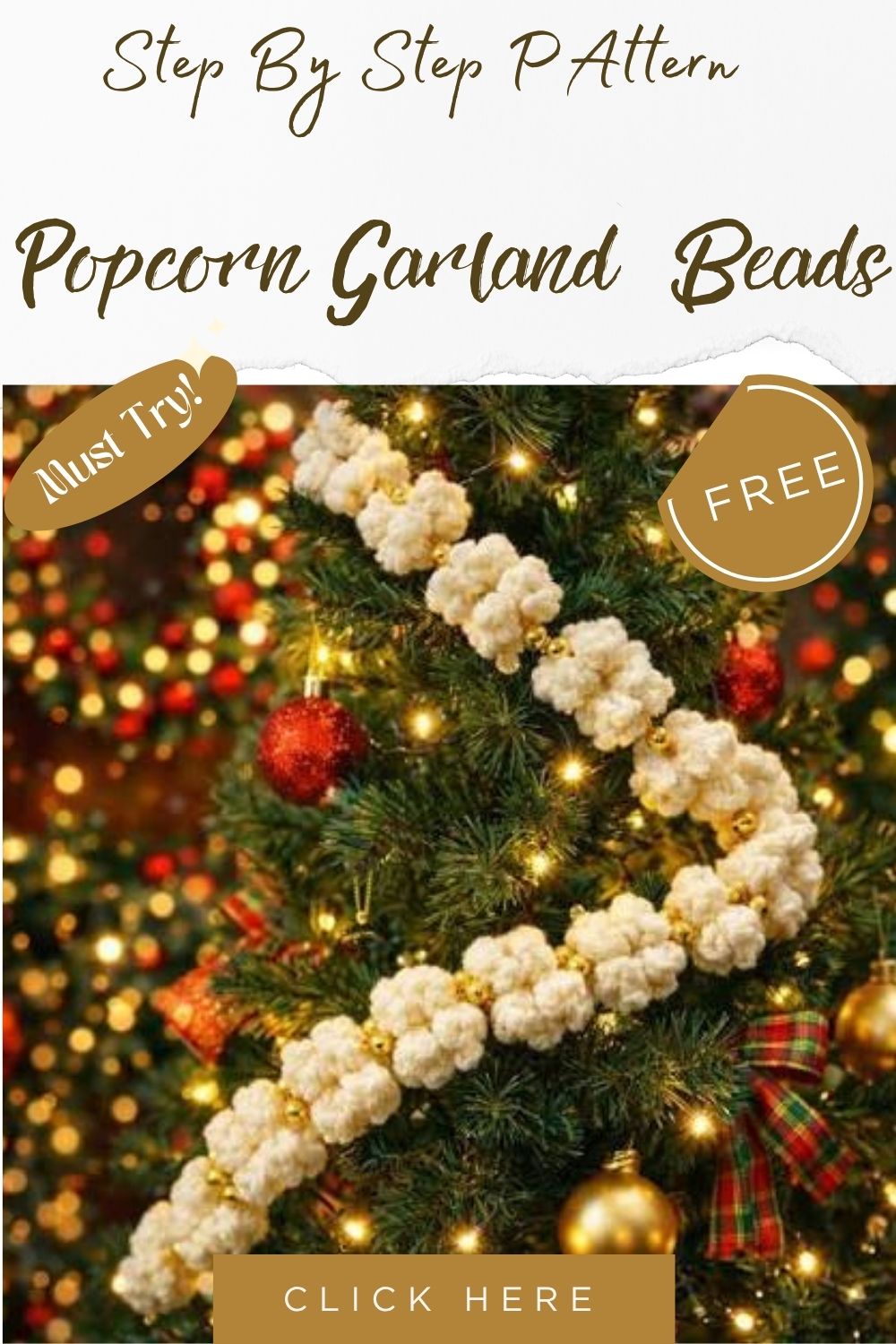
A crochet popcorn garland with beads proves that one repeated stitch can produce a genuinely dimensional holiday piece. The puffy texture of each cluster pairs naturally with the quiet sparkle of the beads. Together, they earn the finished strand a spot well beyond a single season. Once the popcorn stitch feels familiar, the same technique adapts to countless colors, lengths, and occasions.