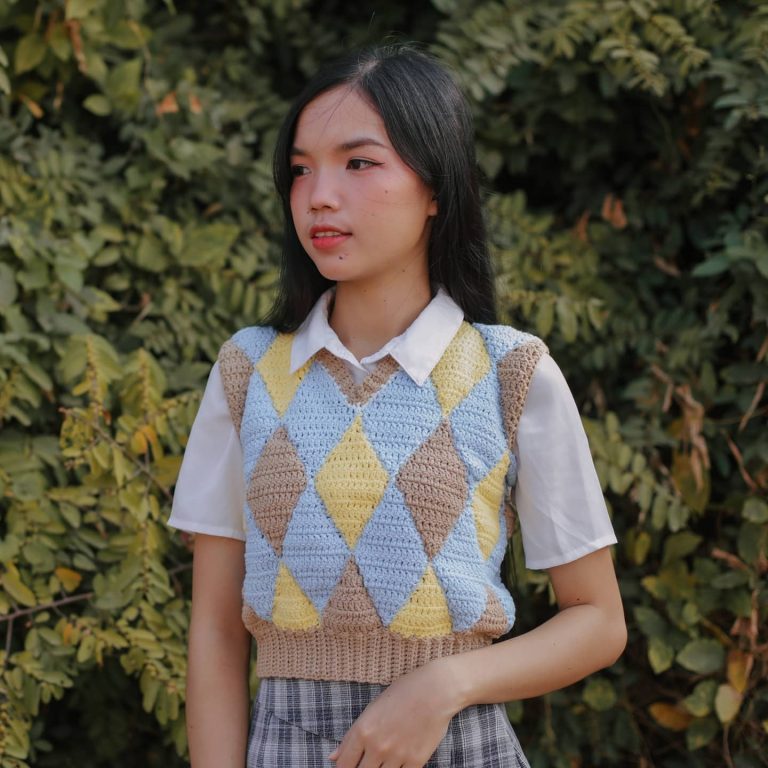
Graceful Crochet Chunky Vest Pattern Fast Weekend Pattern
Whip up the Graceful Crochet Chunky Vest in a single weekend, a fast weekend pattern that’s easy, modern, and irresistibly cozy. Plush texture, effortless drape, and layer-anywhere style make it a beginner-friendly favorite. Bust your stash, elevate every outfit, and reach for this flattering wardrobe staple again and again.
Stitch the Graceful Crochet Chunky Vest in just a weekend with this fast weekend pattern that feels effortless and stylish. Designed as a beginner-friendly, quick crochet vest, it works up in chunky yarn for plush texture, minimal seaming, and a flattering, modern silhouette.
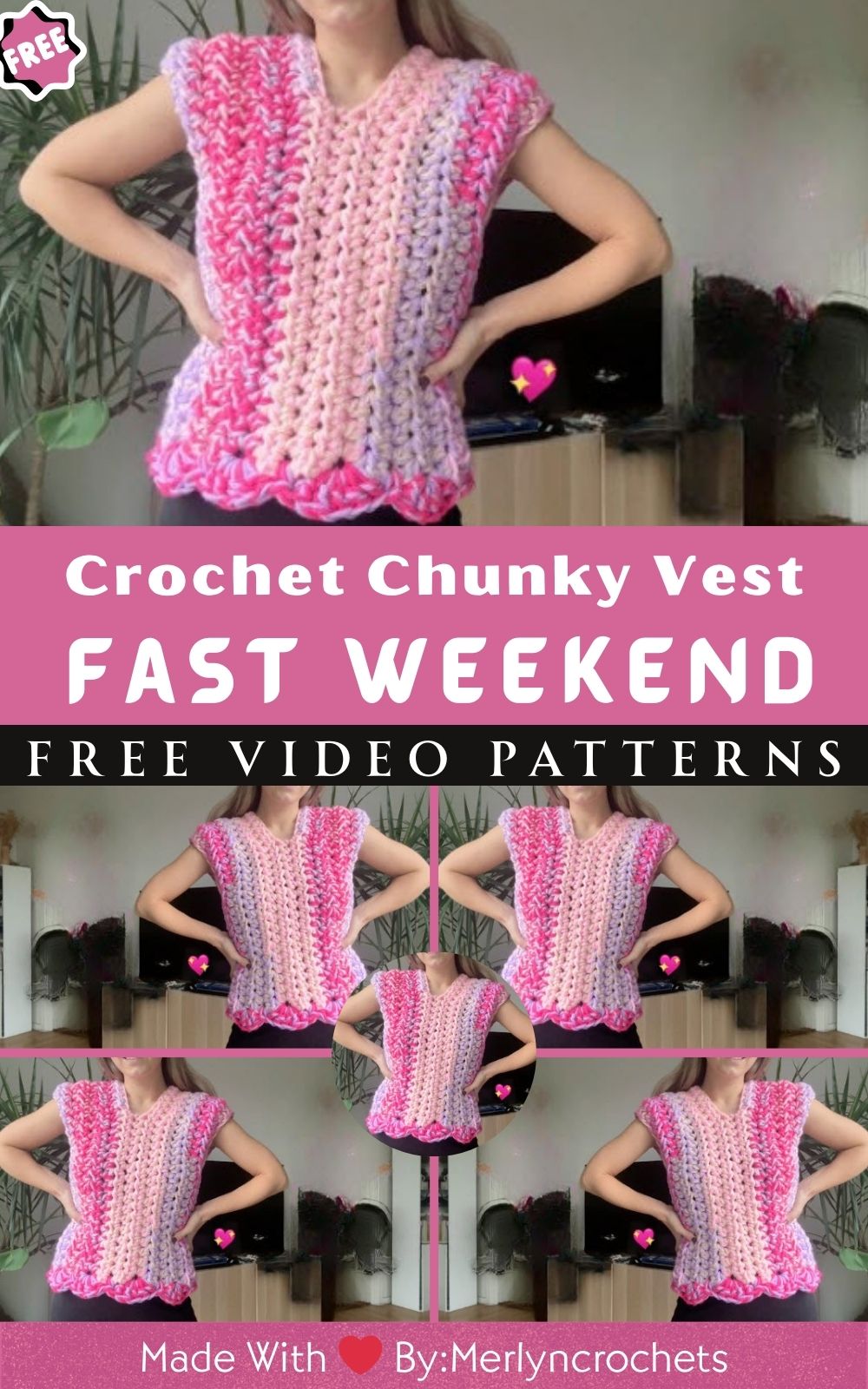
Customize the length and armholes, layer it over tees or dresses, and enjoy a wardrobe staple that’s cozy, versatile, and gift-ready. This chunky vest crochet pattern is perfect for instant gratification, capsule closets, and anyone craving chic, handmade warmth without the wait.
Uses:
- Every day, layering over tees, turtlenecks, and jeans
- Office polish or Zoom-ready style over blouses and slacks
- Last-minute handmade gift or craft fair best seller
Graceful Crochet Chunky Vest – Fast Weekend Pattern
Firstly, are you craving a cozy, modern, and doable weekend that truly flies off your hook? Secondly, the Graceful Crochet Chunky Vest delivers a fast, beginner-friendly pattern that thrives on scrap yarn and plush chunky textures. Moreover, the method is delightfully simple: crochet a single long strip, add a centered neckline opening, seam the sides, and optionally trim the hem. Additionally, the entire build relies on half double crochet and minimal shaping, so you can size as you go and customize the length in real time. Consequently, you’ll finish in a few relaxed hours with a soft, drapey vest that layers effortlessly over tees, dresses, and turtlenecks. Finally, if you want extra confidence, you can follow along with the step-by-step video tutorial linked above.
Note: US crochet terms are used.
Materials and Tools (with exact specs and guided measurements)
- Firstly, yarn: bulky/chunky weight or two strands of medium/worsted held together; mixed colors are welcome.
- Secondly, approximate quantities (vary by size, yarn, and length):
- Cropped/short: 250–350 g (about 175–275 m / 190–300 yds)
- Regular length: 350–500 g (about 275–400 m / 300–440 yds)
- Moreover, the video demonstrates pairing two thinner strands to mimic a single chunky strand.
- Secondly, approximate quantities (vary by size, yarn, and length):
- Additionally, crochet hook: 15 mm (Q) for the main body.
- Furthermore, an optional smaller hook (5–8 mm) for weaving ends.
- Also, scissors, measuring tape, and stitch markers or safety pins (for neckline and armholes).
- Finally, a tapestry needle is optional since a smaller hook can weave ends just fine.
Because this is a made-to-measure project, you’ll rely on the following measurements:
- Firstly, the desired front length (shoulder to hem).
- Secondly, the desired back length (shoulder to hem).
- Moreover, the neckline opening width (typically 6–9 in / 15–23 cm).
- Additionally, armhole depth (commonly 7–10 in / 18–25 cm).
- Finally, bust/upper chest width (to determine how many rows you need).
At-a-Glance Specs From the Demonstration (quick-start numbers)
- Firstly, hook: 15 mm.
- Secondly, foundation chain: 50 chains.
- Moreover, stitch pattern: half double crochet throughout the body.
- Additionally, rows before neckline (first side): 8 rows.
- Furthermore, neckline opening: ch 12 and skip 12 (centered); work 18 hdc before and 18 hdc after on that middle row.
- Also, rows after neckline (second side): 8 rows to mirror the first side.
- Next, side seams: 14 slip stitches per side, leaving the remaining opening for the armholes.
- Finally, optional border: shell edge along the hem (5 dc shell, skip one row edge, 1 sc, repeat).
Consequently, you can copy these numbers for a quick small/medium fit in chunky yarn or adjust to your exact measurements using the guidance below.
Abbreviations (US Terms)
- Firstly, ch = chain
- Secondly, hdc = half double crochet
- Moreover, dc = double crochet
- Additionally, sc = single crochet
- Furthermore, sl st = slip stitch
- Also, st(s) = stitch(es)
- Finally, RS/WS = right side/wrong side
Gauge (relaxed and flexible)
- Firstly, because this vest is made to your measurements, the gauge is forgiving.
- Secondly, with a 15 mm hook and chunky yarn, expect approximately 6–7 hdc and 5–6 rows per 4 in / 10 cm.
- Moreover, if your fabric feels too loose, drop the hook size; if it’s stiff, go up a hook or relax your tension.
- Finally, remember that chunky yarn often relaxes after wear.
Construction Overview
- Firstly, crochet a long vertical strip that runs from the back hem, over the shoulder, to the front hem.
- Secondly, create a centered neckline slit on the middle row.
- Moreover, mirror the first side to complete the second half.
- Additionally, seam each side partway up to form armholes.
- Finally, optionally add a shell border along the hem for a sweet finish.
Consequently, you’ll achieve a clean, minimal silhouette with zero complicated shaping.
Step-by-Step Instructions (with estimated making times)
- Plan and Measure (10–15 minutes)
- Firstly, decide on your desired front length and back length.
- Secondly, add them together to get your foundation chain length.
- For example, if you want 12 in front and 13 in back, aim for a total that measures about 25 in / 63.5 cm over the shoulder.
- Moreover, mark your target neckline width (for example, 7–8 in / 18–20 cm).
- Additionally, mark your target armhole depth (for example, 8–9 in / 20–23 cm).
- Finally, keep it flexible since you’ll measure directly on your body as you go.
- Foundation Chain and Set-Up (10–20 minutes)
- Firstly, make a slipknot and chain to your measured length.
- Secondly, for a quick-start size like the demo, chain 50.
- Moreover, lay the chain over your shoulder to confirm it spans front and back comfortably.
- Additionally, if you want a longer back than front, add a few chains now to compensate.
- Next, yarn over, skip the last 2 chains, and place your first hdc in the third chain from the hook.
- Finally, work 1 hdc into each chain across to complete Row 1.
- Work the First Half (Rows 2–8 or your custom count) (30–60 minutes)
- Firstly, ch 2 and turn; the turning chain does not count as a stitch.
- Secondly, place 1 hdc in each stitch across to keep edges straight.
- Moreover, repeat the row pattern until your fabric comfortably covers half your body width when folded at the shoulder.
- Additionally, for the demo size, work 8 rows before the neckline.
- Meanwhile, try the panel on by draping it over your shoulder to check coverage.
- Finally, assess whether your row count will allow front and back to meet at the sides for easy seaming.
- Create the Centered Neckline Opening (one middle row) (10–20 minutes)
- Firstly, on your next row, work hdc to the center point.
- Secondly, for the demo counts, place 18 hdc to reach the midpoint.
- Moreover, chain the number needed for your neckline and skip the same number of stitches below.
- Additionally, for the demo counts, chain 12 and skip 12 stitches.
- Next, resume with hdc in the next stitch after the skipped section and finish the row.
- Consequently, you’ve created a clean, centered neck slit.
- Finally, quickly check the head fit and adjust by adding or removing a few chains if necessary.
- Work the Second Half to Mirror the First (30–60 minutes)
- Firstly, ch 2 and turn, then hdc evenly to the neckline chain.
- Secondly, place 1 hdc in each chain across the neck opening to bridge it securely.
- Moreover, continue hdc to the row’s end for a neat, continuous fabric.
- Additionally, repeat rows until you match the first half’s row count.
- For the demo counts, add another 8 rows after the neckline.
- Finally, your strip now has symmetrical front and back lengths with a centered neckline.
- Side Seams and Armholes (10–25 minutes)
- Firstly, fold the strip at the shoulder so the front and back edges align.
- Secondly, decide on our armhole depth and mark both sides with stitch markers.
- Moreover, starting from the bottom hem, sew up with slip stitches for the amount you want closed.
- Additionally, for the demo counts, seam 14 stitches up each side with sl st, leaving the rest for the armhole.
- Furthermore, keep your tension relaxed while sewing to avoid puckering.
- Finally, fasten off and repeat the exact seam on the other side.
- Optional: Shell Border on the Hem (20–40 minutes)
- Firstly, attach yathe rn at a side or back point for even distribution.
- Secondly, ch 3 (counts as 1 dc), then work 4 dc into the same space to form a 5-dc shell.
- Moreover, skip the next row edge and place 1 sc in the following row edge.
- Additionally, repeat the sequence: skip 1 row edge, 5 dc shell in the next, skip 1 row edge, 1 sc in the next.
- Next, continue this rhythm all the way around the hem for a tidy scallop.
- Finally, join with a sl st to the top of the beginning ch-3 and fasten off.
- Weave In Ends and Final Touches (10–15 minutes)
- Firstly, turn the vest inside out and weave ends on the wrong side using a smaller hook or tapestry needle.
- Secondly, give the hem and seams a gentle tug to relax and align stitches.
- Moreover, lightly steam block if your yarn allows, keeping the iron hovering rather than pressing.
- Finally, flip the right side out and admire your clean finish.
Overall making time: Most crafters finish within 2–4 hours of relaxed, weekend stitching. Consequently, this is a true fast-finish pattern.
Sizing Made Simple (Customize as You Go)
- Firstly, the foundation chain length = front length + back length.
- Secondly, cropped: 22–25 in total (56–64 cm).
- Moreover, regular: 26–30 in total (66–76 cm).
- Additionally, longline: 31–36 in total (79–91 cm).
- Furthermore, rows (width) = how far the fabric wraps from side seam to side seam when folded.
- For a close fit, stop when edges meet without strain.
- For a relaxed fit, add 1–3 extra rows.
- Next, neckline opening (chain and skip) = head circumference + comfort.
- Typically, 6–9 in (15–23 cm) across works for most makers.
- Finally, side seam length determines armhole depth.
- Typically, close 4–7 in (10–18 cm) and leave 7–10 in (18–25 cm) open.
Because yarns stretch differently, keep trying on the vest as you work. Moreover, note that chunky yarn often relaxes after the first wear.
Basic Tips for a Smooth Make
- Firstly, hold two strands of medium yarn together to mimic bulky yarn if your stash is mixed.
- Secondly, keep turning chains consistent (ch 2 for hdc rows) and place the first hdc in the first true stitch.
- Moreover, mark the exact center stitch before the neckline row to speed counting.
- Additionally, when stitching across the neckline chain, insert under two loops or the back bump for a sturdy bridge.
- Furthermore, slip stitch seams with an easy hand so the sides stay flat.
- Finally, for the shell border, skip every other row edge consistently to keep shells even.
Common Mistakes and How to Fix Them
- Firstly, uneven edges or a slanting panel:
- Cause: skipping the first/last stitch or miscounting after the turning chain.
- Fix: count stitches at row ends for a few rows until it becomes automatic.
- Secondly, the neckline is too tight or too wide:
- Cause: the chain count didn’t match your comfort or head size.
- Fix: redo only the middle row and add or remove 2–4 chains.
- Moreover, the armhole feels snug:
- Cause: you seemed too high up the side.
- Fix: undo several slip stitches and re-fasten at a lower point.
- Additionally, the fabric feels stiff:
- Cause: tension is tight, orthe yarn is dense.
- Fix: go up a hook size, relax your grip, or switch to a drapier fiber blend.
- Furthermore, the gappy neckline bridge:
- Cause: working into just one chain loop across the opening.
- Fix: insert under two loops or the back bump for a tidier edge.
- Finally, wavy shell border:
- Cause: shells placed too close or inconsistent skipping.
- Fix: maintain the “shell, skip 1 row edge, sc, skip 1 row edge” cadence.
Variations to Try
- Firstly, color-blocking for impact:
- Work the first eight rows in Color A and the post-neckline rows in Color B.
- Alternatively, change colors every 2–3 rows for bold striping.
- Secondly, ombre and scrap-busting:
- Hold two strands and swap only one strand at a time to blend shades gradually.
- Moreover, tie secure knots and weave tails inside for a speckled, artisanal look.
- Additionally, different borders:
- Swap shells for crab stitch (reverse single crochet) or a clean round of single crochet.
- Furthermore, length tweaks:
- Add chains at the start for a longer back or subtract for a cropped vibe.
- After seaming, add a few hdc rounds at the hem to lengthen subtly.
- Next, texture changes:
- Alternate FLO hdc on odd rows and BLO hdc on even rows for ribbed stripes.
- Finally, closures and collars:
- Stop seaming earlier and add side ties, or edge the neckline with a loose round of single crochet.
Care and Wear
- Firstly, follow your yarn label: hand-wash or gentle machine cycle as permitted.
- Secondly, lay flat to dry to preserve shape and drape.
- Moreover, store folded rather than hanging to avoid stretching.
- Finally, style over fitted tees, button-ups, or dresses for instant cozy dimension.
Troubleshooting Fit Quickly
- Firstly, the bust feels snug:
- Add 1–2 rows to each side before the neckline next time, or steam lightly to relax stitches.
- Secondly, shoulders slip:
- Decrease the neckline width by 2–4 chains in the middle row or add a small ribbed collar.
- Finally, the back hem rides up:
- Start with a longer foundation chain for the back portion by adding 2–3 inches there.
Why This Pattern Works for Beginners FOR ( Crochet Chunky Vest Pattern)
- Firstly, simple stitches (hdc, sc, dc) keep the learning curve gentle.
- Secondly, straight rows eliminate shaping stress.
- Moreover, made-to-measure construction ensures a personalized fit with minimal math.
- Additionally, chunky yarn and a 15 mm hook give rapid progress and plush texture.
- Finally, your confidence grows row by row as the vest comes together quickly.
Quick Reference: Video Tutorial
- Secondly, learn the foundation chain and hdc rows.
- Moreover, see the centered neck opening with a chained gap.
- Additionally, practice side seams with slip stitches.
- Finally, add the optional shell border like a pro.
Recap and Call-to-Create FOR ( Crochet Chunky Vest Pattern)
- Firstly, in a single weekend, you can stitch a Graceful Crochet Chunky Vest with plush texture, clean lines, and an easy, customizable fit.
- Secondly, because the steps are straightforward and forgiving, the pattern invites experimentation with color, yarn combinations, and lengths.
- Moreover, the optional shell border adds a charming finish without slowing you down.
- Additionally, the made-to-measure approach ensures wearable comfort from the very first try-on.