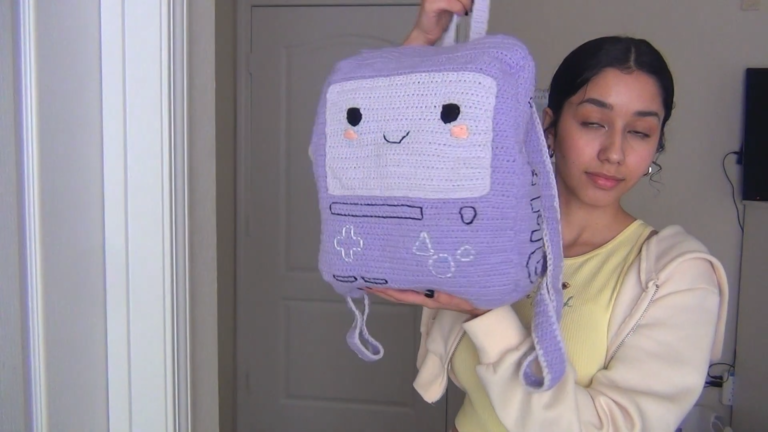
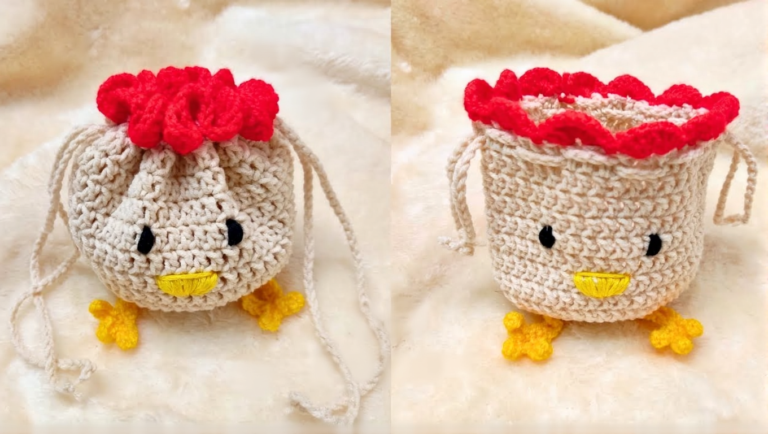
Spectacular Crochet Bag Vlog Amigurumi Pattern
Discover the Spectacular Crochet Bag Vlog Amigurumi Pattern, a playful, beginner-friendly project with step-by-step video guidance, trendy textures, and customizable colors. Perfect for gifts, markets, and everyday style, this easy crochet bag pattern turns scraps into standout accessories you’ll love to make and wear.
Looking for a crochet bag pattern that feels modern, practical, and fun to make? The Spectacular Crochet Bag Vlog Amigurumi Pattern blends amigurumi-style shaping with a clear, step-by-step video tutorial, perfect for confident beginners and seasoned makers alike.

Enjoy a chic, textured finish, customizable colors and size, and a sturdy structure that holds its shape. It’s a quick, stash-friendly project that turns leftover yarn into a stylish, everyday accessory equally great for gifting or stocking your market table. Simple, trendy, and genuinely satisfying to stitch.
Great uses:
- Everyday carryall for errands, brunch, or beach days
- Handmade gift for birthdays, holidays, or teacher appreciation
- Market-ready bestseller to elevate your craft fair lineup
Spectacular Crochet Bag Vlog Amigurumi Pattern
Looking for a modern, sturdy, and delightfully minimalist crochet bag you can actually use every day? You’re in the right place. This Spectacular Crochet Bag blends corner-to-corner crochet with amigurumi-style firmness, secure seaming, and reinforced straps. Because the steps are simple and the look is striking, beginners can dive in with confidence. Moreover, the method encourages creativity: add bold letters, switch up colors, or tweak the shape to fit your style. Consequently, you’ll end up with a bag that feels handmade yet polished, perfect for errands, markets, or gifting.
Note: This pattern is original and written for clarity; the video provides visual inspiration for techniques like C2C fabric, folded straps, structural seams, and a magnet closure.
Finished Size
- Bag body (flat): approximately 13 in wide x 11 in tall (33 x 28 cm)
- Depth (after structural folds): about 2 in (5 cm)
- Straps: two straps, each about 22 in (56 cm) long after folding; width about 1.5 in (4 cm)
Because yarn, tension, and hook size affect measurements, you can adjust counts or add rounds to meet the target dimensions.
Skill Level
- Advanced beginner. Because you’ll use basic stitches, simple shaping, and straight seams, it’s accessible. Furthermore, the optional felt letters and magnet closure are straightforward hand-sewing tasks.
Materials (with exact measurements)
Yarn
- Main color (MC): 100% cotton, worsted weight (category 4). Approximately 400–500 g (700–900 yds / 640–825 m) for the panels, edging, and seaming. Choose a smooth cotton to hold its shape.
- Strap yarn (if you want extra firmness): Lion Brand 24/7 Cotton or equivalent, worsted weight. Approximately 120–160 g (220–300 yds / 200–275 m).
Hooks
- 4.0 mm (G-6) hook for panels and straps (tight, amigurumi-style gauge).
- 3.5 mm (E-4) hook for edging and finishing, if you tend to crochet loosely.
Support + Notions
- Black felt sheet (approx. 9 x 12 in / 23 x 30 cm) for letters or logo (optional).
- Strong fabric glue or fusible fabric adhesive (optional, for letter placement).
- Sewing needle and black thread (to secure felt letters).
- 1 pair strong sew-in magnets or magnetic snaps (14–18 mm diameter). Use high-strength magnets if the yarn is thick.
- Tapestry needle for seaming.
- Stitch markers or quilting clips for alignment.
- Scissors and measuring tape.
Internal Strap Support (recommended)
- Firm fabric strip (e.g., denim or heavy bamboo-viscose trim): two pieces, each 20–22 in (51–56 cm) long x 1 in (2.5 cm) wide; or
- Cotton piping/cord: two pieces, each 20–22 in (51–56 cm) long, approx. 0.25 in (6 mm) diameter.
Optional Liner
- Pre-made zippered bag insert (approx. 11 x 9 in / 28 x 23 cm), or
- Lining fabric: 0.5 yd (0.45 m), zipper (9–11 in / 23–28 cm), sewing thread.
Because cotton stretches less than acrylic, it’s ideal for bags. Furthermore, reinforced straps dramatically improve durability.
Gauge
- C2C hdc “box” gauge: 4 boxes = approximately 2.75 in (7 cm) across and down with a 4.0 mm hook.
- Strap fabric (hdc flat): 16 sts x 14 rows = approx. 4 x 4 in (10 x 10 cm).
Therefore, adjust the hook size to match the finished dimensions.
Abbreviations (US Terms)
- ch: chain
- sl st: slip stitch
- sc: single crochet
- hdc: half double crochet
- dc: double crochet
- RS/WS: right side/wrong side
- C2C: corner-to-corner crochet
- rep: repeat
- st(s): stitch(es)
Because we want a tight, bag-friendly fabric, this pattern uses C2C with hdc boxes (tighter than dc boxes). However, if you prefer classic C2C DC boxes, simply track sizing carefully.
Construction Overview
- You’ll crochet two C2C rectangles. Then you’ll seam them. Next, you’ll add internal “pinch” seams to create a subtle boxed depth. After that, you’ll make two folded, reinforced straps. Finally, you’ll add the logo letters and install a magnetic closure. Consequently, the bag looks crisp and carries well.
Step-by-Step Instructions (with estimated times)
- Plan Your Panels and Chart (Making time: 15–20 minutes)
- Decide on the panel size: target 13 x 11 in (33 x 28 cm). Because tension varies, plan to measure as you go.
- If adding letters, sketch a simple block-text logo on graph paper sized to your panel. Alternatively, use felt letters later for crisp edges.
- Mark the top/bottom orientation on your plan so seams and letters align.
Because planning saves frogging time, take a few minutes to confirm your proportions.
- Crochet the Front Panel in C2C HDC Boxes (Making time: 2.5–3 hours)
- Start at one corner. For each C2C hdc box: ch 5, hdc in 3rd ch from hook and in next 2 ch (3 hdc total). That’s one box.
- For Row 2, turn, ch 5, hdc in 3rd ch and next 2 ch, sl st to top of previous box, ch 2, work 3 hdc into the side space to create the next box. Continue across to grow the diagonal.
- Continue increasing one box per row until your width approaches 13 in (33 cm).
- Then start decreasing: at the beginning of each row, instead of chaining 5, sl st across the top of the previous box, then ch 2 and work 3 hdc into the next side space to continue. Decrease rows until your height is approximately 11 in (28 cm) and your rectangle is complete.
- Keep edges straight and count boxes in each row to maintain symmetry.
Because hdc boxes create a denser fabric, you’ll naturally get fewer gaps. Furthermore, cotton yarn enhances structure.
- Crochet the Back Panel in C2C HDC Boxes (Making time: 2.5–3 hours)
- Repeat Step 2 to make an identical rectangle.
- Stack panels to confirm they match. If one is slightly larger, add or remove a row to even them out.
Matching panels leads to even seams; measure both before proceeding.
- Add a Firm Edging to Both Panels (Making time: 15–25 minutes)
- Witha 3.5 or 4.0 mm hook, work 1 round of sc evenly around each panel: 1 sc per hdc side space, 3 sc in each corner.
- Sl st to join, fasten off, and weave in ends.
A clean edge stabilizes the seam; don’t skip this round.
- Seam the Sides and Bottom (Whip Stitch) (Making time: 25–40 minutes)
- Place panels RS together. Clip or pin all around to align edges.
- With a tapestry needle and MC yarn, whip stitch both sides and the bottom. Keep stitches small and even.
- Turn the RS out and check the corners.
Consistent seaming improves strength, avoiding pulling too tight or leaving gaps.
- Create Structural Folds for a Subtle Boxed Base (Making time: 20–30 minutes)
- For a crisp center crease, turn the bag WS out. Pinch a vertical line down the middle of each side panel (approximately 1 in / 2.5 cm in from the side seam). With MC yarn, hand-sew a short, neat running stitch along the inside fold to encourage the crease. Keep stitches internal and invisible from the outside.
- For the side “pinch” definition: flip RS out. Pinch the outer edges slightly and stitch tiny tacks on the inside at the top and bottom to nudge the fold. Do not over-tighten.
- Check shape. The bag should now hold a gentle 2 in (5 cm) depth.
Consequently, the silhouette gains definition without heavy interfacing. Moreover, this step stabilizes the base for everyday use.
- Crochet Two-Folded, Reinforced Straps (Making time: 60–90 minutes)
- With 4.0 mm hook and strap yarn, ch 9.
- Row 1: hdc in 2nd ch from hook and across (8 hdc). Turn.
- Row 2–(until desired length): ch 1, hdc across. Repeat until the fabric measures 42–44 in (107–112 cm). Because you will fold the strap in half lengthwise and insert support, this length provides a finished 21–22 in (53–56 cm) strap.
- Make two identical strips.
- Block lightly if your fabric curls.
Because a folded strap doubles strength, you’ll notice far less stretching over time.
- Insert Support and Close the Strap Casings (Making time: 20–30 minutes)
- Place a firm fabric strip or cord along the center. Fold the crochet strip lengthwise to encase the support.
- With matching yarn, whip stitch along the open edge to close. Keep stitches snug and uniform.
- Repeat for the second strap.
Therefore, the straps feel substantial and comfortable on the shoulder.
- Position and Sew Straps to the Bag (Making time: 20–30 minutes)
- Try the bag on and mark the strap placement for your preferred drop. Common spacing: 3 in (7.5 cm) in from each side seam on the front and back.
- Pin straps on the inside top edge for a clean silhouette. Alternatively, sew them to the outside for a utilitarian look.
- Hand-sew through the strap, the bag wall, and the strap again (box or X-box stitching) for maximum security.
Because the bag carries weight, secure stitching is crucial. Furthermore, sewing through multiple layers improves longevity.
- Add Letters or a Minimalist Logo (Felt + Stitch) (Making time: 45–60 minutes)
- Cut bold block letters from black felt. Aim for letters 1.25–1.5 in (3–4 cm) tall so they read clearly on the panel.
- Arrange your phrase (e.g., “BAG” or another minimalist label). Use a ruler to center horizontally and vertically on the front panel.
- Lightly dot fabric glue on each letter. Place and press. Let it sit for a few minutes.
- Hand-sew around each letter with small, even stitches, catching the felt edges for durability. Secure inner cutouts (e.g., inside “A,” “O,” or “R”) with tiny tack stitches.
Because glue alone can eventually lift, stitching the felt ensures the design stays crisp wash after wash.
- Install a Magnetic Closure (Making time: 15–20 minutes)
- Choose a strong sew-in magnetic pair. Mark placement at the top center inside the bag opening.
- Hand-sew one magnet on the inside front, about 1 in (2.5 cm) below the edge. Sew the matching magnet on the inside back or inside flap if you’ve added one.
- Test the closure. If the yarn is thick, stronger magnets improve snap.
Consequently, your bag closes neatly without disrupting the clean exterior.
- Optional: Add a Liner or Reuse a Bag Insert (Making time: 45–90 minutes)
Option A: Reuse a bag insert
- Slide a pre-made zippered insert into the bag. Check fit. If it matches your dimensions, you’re done—no sewing required.
Option B: Sew a simple fabric liner
- Cut two fabric rectangles equal to your panel size minus 0.5 in (1.3 cm) in width and height for seam allowance.
- If adding a zipper, sew it to the top edges first.
- With RS together, sew sides and bottom with 0.25 in (6 mm) seam allowance. Finish raw edges.
- Insert the liner into the bag. Hand-sew the top edge of the liner to the bag’s inside, keeping stitches invisible.
Because a liner adds pockets, structure, and privacy, it’s a great upgrade. Moreover, if you reuse inserts, you can swap liners across different bags.
- Finishing Touches (Making time: 15–30 minutes)
- Weave all ends neatly inside seams.
- Lightly block the bag: steam-hover or gently wet-and-shape. Avoid squashing the strap reinforcement.
- Check symmetry: confirm strap lengths match, logo sits straight, and magnets align.
Therefore, your bag looks boutique-level, not “just finished.”
Basic Tips for Success for (Crochet Bag Vlog Amigurumi)
- Use more transitions in your making process, too: plan first, measure often, and adjust gradually.
- Keep your gauge tight. Because loose C2C can gape, hdc boxes help maintain density.
- Clip before seaming. Moreover, mark the midpoint on each panel so you don’t skew one side.
- Reinforce straps. Consequently, your bag won’t stretch or sag under everyday essentials.
- Test magnet strength. Because cotton is thick, weaker magnets may not hold well.
Common Mistakes (and Quick Fixes)
- Skipping the edge round: edges stretch while seaming. Instead, add a sc border to stabilize the shape.
- Uneven panel sizes: not measuring as you go leads to lopsided seams. Instead, count boxes and match measurements before binding off.
- Strap creep: cotton stretches under load. Instead, insert fabric or cord support and double the layer by folding.
- Crooked letters: eyeballing placement invites drift. Instead, use a ruler, light chalk marks, and glue dots before stitching.
- Weak closure: tiny magnets get overwhelmed by thick yarn. Instead, choose larger or stronger magnets and test before sewing.
Because prevention is faster than repair, measure, pin, and test every stage.
Variations You’ll Love
- Switch strap styles: make a single long crossbody strap by crocheting a longer strip (60–65 in / 152–165 cm before folding), inserting one continuous cord, and attaching across diagonals.
- Change the palette: go monochrome for elegance, high-contrast for graphic pop, or variegated yarn for a playful look.
- Stitch in your logo: prefer all yarn? Then add text using surface slip stitch or tapestry crochet. Because colorwork tightens fabric, monitor tension carefully.
- Add a flap: crochet a top flap by extending the back panel upward 3–4 in (7.5–10 cm). Install the magnet on the flap for a sleek close.
- Boxed corners: instead of internal tacks, flatten the bottom seams and stitch 1 in (2.5 cm) boxed corners for a firmer base.
- Pocket power: sew a slip pocket or zipper pocket into your liner for keys and cards.
Consequently, you can adapt this framework to create a whole series of minimalist statement bags.
Care Instructions for (Crochet Bag Vlog Amigurumi)
- Spot clean with mild soap and cool water. Lay flat to dry.
- If machine washing is necessary, use a delicate bag and ga entle cycle, then reshape and air-dry. Avoid heat on magnets.
- For felt letters, avoid heavy agitation and wringing. Instead, press the moisture out with a towel.
Because proper care extends the life of your bag, treat it like a favorite sweater.
Troubleshooting + FAQs for (Crochet Bag Vlog Amigurumi)
- My C2C panel is too narrow. What now?
- Add a few more increase rows before you start decreasing. Alternatively, add an sc border to reach the target width.
- The bag stretches when loaded. How do I fix this?
- Reinforce straps with cord and consider a fabric liner. Moreover, cotton yarn and a tight gauge help.
- My magnet doesn’t snap closed.
- Upgrade to stronger magnets or move them slightly higher. Because yarn layers add thickness, strength matters.
Why This Pattern Works for (Crochet Bag Vlog Amigurumi)
- By using hdc C2C, you get the visual grid of corner-to-corner without the looseness that can make bags floppy. Furthermore, the internal crease seams deliver structure without bulky interfacing. Additionally, folded straps with embedded support mimic ready-to-wear handles. Consequently, the finished bag feels substantial, stylish, and reliable.
SEO Highlights for (Crochet Bag Vlog Amigurumi)
- Crochet bag pattern, C2C crochet bag, beginner crochet bag tutorial, amigurumi-style bag fabric, reinforced crochet straps, felt letter logo, magnetic snap handbag, cotton yarn tote, easy crochet bag with lining, video-inspired crochet pattern.
- Moreover, once you’ve made one, you’ll have a versatile template you can remix endlessly. Consequently, you’ll build a collection of spectacular, everyday-ready crochet bags that truly stand out.